NYSE

NYSE
Another day at the Stock Market

Tuesday, December 18, 2012

Facebook: Blue in Person, Gold in Investment

Happy Tuesday to everyone! First, I would like to congratulate our Vice-President, Chris Cattafi, on his acceptance to NYU! Also, we know everyone is busy over the holidays therefore this will be our last post of the calendar year. We wish everyone Happy Holidays, Merry Christmas, and a Happy New Year (full of investing ;) ).
Our post today is about social network giant Facebook (FB). First established to compare people, and then as a social media site reserved exclusively for top-tier universities, Facebook now has over one billion users every month. Taken from a Harvard dorm room, the company established and run by CEO Mark Zuckerberg since 2004 is the epitome of modern online communications. Since the conglomerate is free, FB builds its revenue from advertising, lots and lots of advertising. For those of you who use Facebook, you most likely notice the right column filled with ads, often times specialized. You may also notice throughout the site the ability to advertise, create a page for a business, and even promote one's recently posted status update to ensure everyone will see it! These abilities, some of them quite ridiculous, build the bulk of revenues, and the recent addition of more advertising opportunities are sending stocks skyrocketing.
As we look at Facebook's stock history, we see a sharp drop since the beginning, a slight curve back up, and a drop down towards $20 a share. We all remember Facebook's first day on the market; easily one of the biggest failures, sinking about $12 in a week. Stocks have again been falling since July, but with new advertising campaigns are on the rise again.
In late October, Facebook sought such new programs to increase profits, investment, and overall reliability on the stock market. The newly announced campaign allowed Facebook to open at $24 on October 24th, while it closed at $20 on the 23rd. This 25% increase slowly fell back down towards mid-November, but is now tremendously rising again. When hitting a monthly low, Facebook predicted less revenue than the previous quarter. Fortunately (and for us), I predicted that stocks would quickly rise again -- we bought 90 shares of FB on the Investopedia Stock Simulator priced at $22.34 each nearly a month ago. This fairly large investment, of over $2000, has certainly paid off. When starting to write this, I sold all 90 shares at $27.81, in accordance to my predicted jump upwards. The difference between buy/sell amounts to a profit of almost $500, an outstanding 25%. Now is a better time than ever to invest in Facebook: it is headed back into the top of the market and we expect even more growth and profits over the next year. Perhaps a New Year's resolution could be to invest more in FB!
Thanks for reading our posts about the Stock Market and the global economy. We will write again in January to analyze Pharmaceuticals, and follow with Consumer Goods to analyze holiday shopping a few weeks later. With that, the Investment Club at LMHS wishes everyone Happy Holidays and a Happy New Year!!!

Sunday, December 16, 2012

What Is The Fiscal Cliff?

     Welcome back, everyone! Today, we are going to discuss an esoteric topic that currently leaves much of the American public in confusion: the Fiscal Cliff. Indeed, economists have predicted that the end of 2012 will bring about a dramatic, apocalyptic-sounding event known as the fiscal cliff. But as a statistic would indicate, 80% of Americans are left with a simple question on their minds: what IS the fiscal cliff?
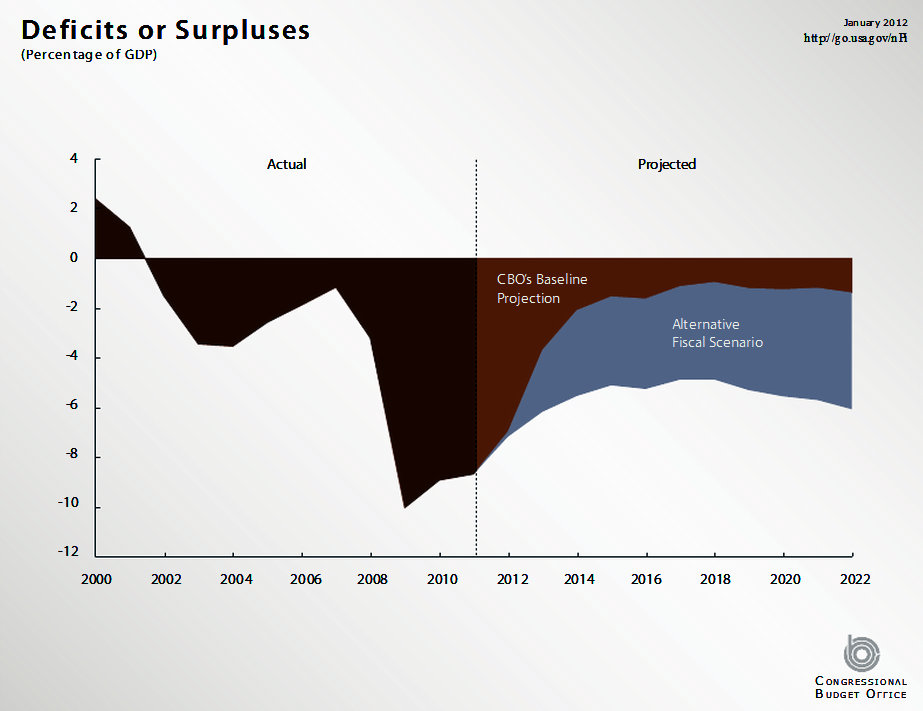
     The fiscal cliff pertains to a series of actions to be taken by the federal government in early 2013 in order to reduce the national budget deficit to almost half its current value. To clarify, the budget deficit refers to the amount of money which the government owes to its creditors within a specific period of time--it is not to be confused with the national debt which is applied to pay for the accumulation of deficit. So why should this reduction in deficit affect the average American? Well, among the most significant contributors to the deficit is government spending, which will be expected to decline with the advent of the fiscal cliff: this includes a reduction in spending for defense, federal agencies, and Cabinet departments (with major social programs such as Medicaid, Social Security, and veterans' benefits remaining exempt). Furthermore, a decline in budget deficit will result in tax increases, thereby offsetting the income tax cuts of the Bush Administration as well as the payroll tax cuts implemented by the Obama Administration.
     With economic stability for the next year at stake, several political stances have developed potential solutions for the fiscal cliff. For example, the Democratic party has agreed to support the extension of Bush Administration tax cuts for the bottom 98% of the economy whilst allowing for tax cuts for the top 2%, as recently confirmed in a public statement. Additionally, President Obama has expressed support for spending cuts such as $1.6 trillion in tax increases over the next decade as well as $400 million of cuts to Medicare over the same time frame. On the other hand, the Republican party has proposed to mitigate the fiscal cliff by extending the Bush-implemented tax cuts (including those for the top 2%) and by cutting the national deficit by $2.2 trillion over the next decade by reducing tax and federal expenditures such as exemptions (charity donations, loopholes, etc.) and Medicare (by raising the eligibility age), respectively.
    The average American deserves to know that the fiscal cliff is not a dramatic economic cataclysm but is nonetheless quite serious. The proposals offered to quell the effects of this reduction in deficit must go into effect by the end of 2012 in order to allow for desirable mitigation. With that in mind, Americans should watch carefully for the latest updates on this volatile subject.


-Chris Cattafi, Co-Founder and Vice President of Investment Club

Saturday, December 15, 2012

Vodafone

As we finished the trio of communications, we mentioned that Verizon is co-owned by another company: Vodafone (VOD). Vodafone also focuses on wired and wireless connectivity, specifically prepaid phones, calling cards, postpaid services (such as Verizon's major plans), and world calling cards. This company was established in 1984 as Racal Strategic Radio Limited; in 1991, however, it RCR Ltd. separated and established a new, independent, and public company called Vodafone. In 1999, the company split 5:1 (GIANT growth). The group changed its name after merging with AirTouch Comm. in 1999 but reverted to Vodafone Group Plc. in 2000. In the latter year, Vodafone worked with Bell Atlantic to create Verizon Wireless.

Our records of Vodafone date to the late 1980's, but the company saw little growth until the Information Era and the split. By 2002, stocks were barely 30% of what they were in 2000, but they were again on the rise. With its holdings growing, VOD saw sustained growth until late 2007. The recession in 2008 again caused a harsh drop in stocks of about 50%. In 2009, Verizon completed its acquisition of AllTell and begin a minor stage of growth that capped around $30.

Lately, Vodafone has been slowing down and losing EPS. Late October witnessed the beginning of investing in the company with accompanying falling stock prices. In mid-November, Comcast planned to layoff 450 employees from NBC Universal; unfortunately, the loss of profits from one major company in the sector also shakes the rest and Vodafone's stocks fell. We predicted soon thereafter that stocks would increase again from $25 to $26, and to buy then to make money. Currently, Vodafone is headed back down after meeting a peak. Once stocks hit about $25 or lower, we strongly encourage investing in the company.

Monday, December 10, 2012

Verizon: Mobile Dominance on the Horizon

To finish our triad of the three major mobile service players, we are looking at Verizon Communications (VZ). Verizon is actually co-owned by VZ and Vodafone (VOD), which we will analyze later this week! To start off, Verizon was established in 1983, the same year as AT&T. The company, which focuses on wired and wireless communications, specializes in cellular providing, network cards/ mobile USB data ports, home networks and providers, as well as business solutions through Verizon Enterprise, comparable to AT&T Enterprise and Sprint Business; although Verizon offers other services, these comprise the majority which affect the business and financial changes we observe.
Right from the beginning, Verizon exhibited tremendous growth. Quintupling within a decade in the late 20th century, and tripling yet again into the Information Era to a record $63 a share, Verizon is easily one of the best growing companies we have observed, at least in early stages. Unfortunately, the end of the Information Era (the Internet boom and technological excitements between 1999-2001) also marked the end of this supreme stock reign, as stocks fell 50%. After seeing newfound growth from 2006 to 2007 and early 2008, the Recession hit and fell back to 2002 levels. Verizon, however, is now selling for $44.03 (similar to pre-recession costs). When we initially studied the company in recent times, we began in late October and early November, with traces of a steepening decline. Fortunately, we bought in mid-November when stocks hit their low and begin rising again. The only significant event in November was the case again Verizon Wireless (note the difference, --Communications and --Wireless). Verizon Wireless asked its two parent companies, Verizon Comm. and Vodafone, for a bailout of $17 billion, but instead of, well, bailing itself out, it spent it on further wireless developments. Even though this situation is like the Federal Government suing Bank of America, Verizon Wireless was forced to pay $8.5 billion each to Verizon Comm. and the latter.
As Verizon expands Verizon Wireless and improves the 4G networks and availability, as well as allow more competitive prices (remember that no company may monopolize a market and drive others out of business), the company will continue to grow. The expenditure of buying T-Mobile could also prove a worthy decision to aid with the expansion of the company globally. We currently expect Verizon to slow down a bit and for stocks to depreciate value, but they will quickly swing back up. Buy while cheap! We bought our stocks on Investopedia in mid-November when stocks hit their low, and on just a few shares have made $18. This is certainly a company worth investing, both in the short- and long-terms.

Sunday, December 9, 2012

Oil Today: A Slippery Situation?

    Welcome back, everyone! Today, we're going to discuss one of modern society's most treasured and versatile resources: oil. Over the past 10 years, oil prices worldwide have skyrocketed to unprecedented proportions, motivating drastic actions by some nations to reduce dependency on oil; the ambivalent success of this transition has created some stability. Nonetheless, the price of oil remains subject to turbulence and instability as a result of several political complications.
     Among the world's major commodities, oil is particularly driven by politics. Indeed, the political affairs of individual nations hold the largest influence over the oil industry; in the wake of the monumental political turmoil in the Middle East (the source of 33% of the world's know oil supply), this is not a good sign. As of recently, some Middle Eastern militia groups have attempted to seize control of certain key oil-producing nations, creating a precarious situation for the global oil market. Similarly, the potential for domestic and offshore drilling in the United States has generated a fair amount of controversy. Indeed, parts of the Gulf of Mexico, the southwestern U.S and Alaska harbor immense deposits of oil and natural gas, some of which remain untapped (and others have been drilled by foreign countries such as China and Russia. This is the result of the American federal government's inability to invest in the domestic oil industry, causing not only an increased reliance on imported oil, but also a degradation and lack of development of oil drilling technology; the latter is to blame for such events as the infamous BP oil spill of 2009; in this ecological disaster, a malfunction at a decades-old oil well operated by BP in the Gulf of Mexico led to a massive contamination of huge expanses of ocean, damaging not only local ecosystems but also local fishing industries. Likewise, the construction of an oil pipeline in the Alaskan wilderness has received backlash by environmentalists, due to its supposed disruptive effect on local ecosystems.
     As one of modern civilization's most valued resources, the trade of oil holds an especially critical role in international political affairs. It should thus come as no surprise that the price of oil is largely subject to influence by various political factors. It has served as both a source of violence and conflict as well as a source of innovation and prosperity. With that in mind, one should closely watch the current affairs of the world's largest oil exporters (i.e. the Middle East, Russia, China) for a good forecast of fluctuations in oil prices.


-Chris Cattafi, Investment Club Co-Founder and Vice President