Welcome back! We hope everyone had a wonderful Valentine's Day and apologize for blogging irregularly! This post will be rather lengthy and will include all the pharmaceutical companies we have yet to speak about.
Accuray (ARAY): Accuray focuses on robotic radio-surgery systems, and was established in 1990. The CEO is Euan Thompson. This company currently sells stocks for about $4.50, confirming our predictions over two months ago prices would severely fall. Since the beginning of the recession in 2008, Accuray has not done well; it sold shares for almost $30 but the cuts in employment and profits caused major problems, which consequently took their toll on the stock market. In late November, it was first rated an 'underperform' by many analysts. Releases later in 2012 showed that profits were only a mere 50% of the expected performance. When we first looked at the company, it was selling for $6.49, but we advised our members to not invest, and it has since hit a trough. We expect a slight increase in profits over last quarter, depending on lab results, but still do not advise investing in ARAY.
AstraZeneca (ANZ): Established in 1992, AztraZeneca is a tad younger than Accuray, and instead focuses on prescription medicine (you may recall "AztraZeneca may be able to help" from many commercials). The current CEO is Simon Lowth. Shares of ANZ currently sell for about $45-46, about the same as prices since 1998. We expected a strong surge of growth at the end of last year, following the signing of new major contracts and promising drug trials. Indeed, until late-January, AztraZeneca experienced strong growth on the market. Unfortunately, analysts predicted below-prediction earnings and share prices have been falling since. As the news wear off, we expect more investment into the company and expect prices to increase again.
BioTime (BTX): BioTime is a company established in 1990, and now headed by Michael West, that concentrates on regenerative medicine, including but not limited to stem cells and neural diseases. As with AztraZeneca, we predicted sustained growth due to good drug results. At this same time, we bought stocks at $3.29, and they reached a high of about $4.70. This was a 42% increase over our purchase price, and a significant source of income in our simulated investments (with $50,000, one could have bought more than 15,000 stocks and made $20,000 in profits). More companies are now approved for stem-cell research and testing, creating more competition. Although BioTime is one of the strongest companies in the industry, investors are now also visiting other options that may prove more lucrative. We advise to remain neutral in investing in BTX; stock prices should not fluctuate significantly over the next few weeks, but we expect slight growth in the long term.
DepoMed (DEPO): DepoMed focuses mainly on central nervous system research and disease treatment. The company was established in 1995 and the current CEO is James Shoeneck. Our first stock market impression of DEPO was of severe instability, alternating up to 75% in a single year. However, more recent observations suggest improving results, thus more investors. After hosting a medical conference, they were named leader in pain medication, and have since gradually gained investor momentum, gaining about 18%. We encourage investment in DepoMed, but make sure to sell your stocks if another company releases excellent results.
Johnson & Johnson (JNJ): Johnson and Johnson is one of the older pharmaceutical companies, dating to 1887, taking a head start into development of health care products. Headed by CEO Alex Gorsky, JNJ sells stocks for about $76. The company saw tremendous sustained growth with the Information Era and slight yet gradual growth since. One of the major results sending JNJ above the $60 was the announcement of the expansion of the psoriasis drug, which treats multiple immune inflammatory disorders. As more suppliers and hospitals buy the drug, the company keeps gaining investors and stock price is about to reach an all-time high. We advise to invest in the company, unless lawsuits from the recent hip replacement recalls cause lawsuits.
Pfizer (PFE): The oldest of our group, the 1849 Pfizer (originally known as Charles Pfizer & Co.), focuses on disease treatments and medicine. The company is headed by Ian Read and stocks sell for about $27. PFE held a constant decline of investment from the Information Era until the 2008 Recession, and now seems to maintain constant growth. The decision to acquire NextWave Pharmaceuticals late last year allowed Pfizer to gain new patents and new grounds in the market, including strong foundations for ADHD medication. The recent split between Pfizer and its animal division, Zoetis (ZTS) is attracting more investors as the focus of the company turns to humans only. Releases of testing for the Lyrica drugs, aimed at curing fibromyalgia (chronic pain), and improved results on stage 3 and 4 cancer also draw in investors. We also encourage investment in PFE and expect growth over the next months.
NYSE

Another day at the Stock Market
Saturday, February 16, 2013

Sunday, January 20, 2013
...and we are back! Abbott Labs and AbbVie
Happy New Year! The Investment Club is back for more discussion about the stock market and the economy, and we hope reading our blog is one of your New Year's resolutions! :)
We are starting off the year with, as we promised, Pharmaceuticals. These are companies that focus on developmental medicine, drug testing and production, medical products, and health or nutritional health products. As we will begin discussing shortly, success for these companies depend largely on testing results, competition, health conferences, monopolies, and company splits. The most recent split is our focus of research today, Abbott Labs (ABT) and AbbVie (ABBV).
 The first of the two companies, Abbott Laboratories, works on the discovery and development of health care products, which include both medical and nutritional products. The company was established in 1900 and is now headed by CEO Miles White. Since the company was made public, it saw little growth until the Information Era (1998). This epoch of new industry and technology created an amazing boom in growth, and, accompanied by a 2:1 split, increased revenue and EPS for ABT. In late November 2012, Abbott Labs was given a 'buy' stock rating considering its 25% increase in equity (a company's balance sheet includes 'assets = liabilities [debt] + equity [gains, money owned]). A few days later, it announced a split within the company to produce a new independent company, AbbVie. Now, Abbott Labs is doing well, and we expect continued growth. We bought some stocks (simulated on Investopedia) at $30.07, and sold them on Friday before closing, at $32.74.
 Our other company for today, AbbVie, is the latest 'offspring' of Abbott Laboratories. This company was created in 2012 from the split and began trading on the market on January 2nd, 2013. AbbVie focuses more on specialized drug testing, including treatments for arthritis, HIV, cystic fibrosis, Parkinson's, other major degenerative diseases, and many more. Unfortunately, we cannot delve far into the stock history of ABBV as it shares all history with ABT up until its stock independence. However, we can say that AbbVie is showing prominent efforts already. It was considered one of the best pharmaceutical investments for 2013, and it is a company we are already investing more in. We bought 8 stocks are $35 a week ago, and they now sit at $37.32, with about 40 more to be bought on Tuesday.
We are starting off the year with, as we promised, Pharmaceuticals. These are companies that focus on developmental medicine, drug testing and production, medical products, and health or nutritional health products. As we will begin discussing shortly, success for these companies depend largely on testing results, competition, health conferences, monopolies, and company splits. The most recent split is our focus of research today, Abbott Labs (ABT) and AbbVie (ABBV).
The first of the two companies, Abbott Laboratories, works on the discovery and development of health care products, which include both medical and nutritional products. The company was established in 1900 and is now headed by CEO Miles White. Since the company was made public, it saw little growth until the Information Era (1998). This epoch of new industry and technology created an amazing boom in growth, and, accompanied by a 2:1 split, increased revenue and EPS for ABT. In late November 2012, Abbott Labs was given a 'buy' stock rating considering its 25% increase in equity (a company's balance sheet includes 'assets = liabilities [debt] + equity [gains, money owned]). A few days later, it announced a split within the company to produce a new independent company, AbbVie. Now, Abbott Labs is doing well, and we expect continued growth. We bought some stocks (simulated on Investopedia) at $30.07, and sold them on Friday before closing, at $32.74.Our other company for today, AbbVie, is the latest 'offspring' of Abbott Laboratories. This company was created in 2012 from the split and began trading on the market on January 2nd, 2013. AbbVie focuses more on specialized drug testing, including treatments for arthritis, HIV, cystic fibrosis, Parkinson's, other major degenerative diseases, and many more. Unfortunately, we cannot delve far into the stock history of ABBV as it shares all history with ABT up until its stock independence. However, we can say that AbbVie is showing prominent efforts already. It was considered one of the best pharmaceutical investments for 2013, and it is a company we are already investing more in. We bought 8 stocks are $35 a week ago, and they now sit at $37.32, with about 40 more to be bought on Tuesday.
Tuesday, December 18, 2012
Facebook: Blue in Person, Gold in Investment
Happy Tuesday to everyone! First, I would like to congratulate our Vice-President, Chris Cattafi, on his acceptance to NYU! Also, we know everyone is busy over the holidays therefore this will be our last post of the calendar year. We wish everyone Happy Holidays, Merry Christmas, and a Happy New Year (full of investing ;) ).
 Our post today is about social network giant Facebook (FB). First established to compare people, and then as a social media site reserved exclusively for top-tier universities, Facebook now has over one billion users every month. Taken from a Harvard dorm room, the company established and run by CEO Mark Zuckerberg since 2004 is the epitome of modern online communications. Since the conglomerate is free, FB builds its revenue from advertising, lots and lots of advertising. For those of you who use Facebook, you most likely notice the right column filled with ads, often times specialized. You may also notice throughout the site the ability to advertise, create a page for a business, and even promote one's recently posted status update to ensure everyone will see it! These abilities, some of them quite ridiculous, build the bulk of revenues, and the recent addition of more advertising opportunities are sending stocks skyrocketing.
As we look at Facebook's stock history, we see a sharp drop since the beginning, a slight curve back up, and a drop down towards $20 a share. We all remember Facebook's first day on the market; easily one of the biggest failures, sinking about $12 in a week. Stocks have again been falling since July, but with new advertising campaigns are on the rise again.
In late October, Facebook sought such new programs to increase profits, investment, and overall reliability on the stock market. The newly announced campaign allowed Facebook to open at $24 on October 24th, while it closed at $20 on the 23rd. This 25% increase slowly fell back down towards mid-November, but is now tremendously rising again. When hitting a monthly low, Facebook predicted less revenue than the previous quarter. Fortunately (and for us), I predicted that stocks would quickly rise again -- we bought 90 shares of FB on the Investopedia Stock Simulator priced at $22.34 each nearly a month ago. This fairly large investment, of over $2000, has certainly paid off. When starting to write this, I sold all 90 shares at $27.81, in accordance to my predicted jump upwards. The difference between buy/sell amounts to a profit of almost $500, an outstanding 25%. Now is a better time than ever to invest in Facebook: it is headed back into the top of the market and we expect even more growth and profits over the next year. Perhaps a New Year's resolution could be to invest more in FB!
Thanks for reading our posts about the Stock Market and the global economy. We will write again in January to analyze Pharmaceuticals, and follow with Consumer Goods to analyze holiday shopping a few weeks later. With that, the Investment Club at LMHS wishes everyone Happy Holidays and a Happy New Year!!!
Our post today is about social network giant Facebook (FB). First established to compare people, and then as a social media site reserved exclusively for top-tier universities, Facebook now has over one billion users every month. Taken from a Harvard dorm room, the company established and run by CEO Mark Zuckerberg since 2004 is the epitome of modern online communications. Since the conglomerate is free, FB builds its revenue from advertising, lots and lots of advertising. For those of you who use Facebook, you most likely notice the right column filled with ads, often times specialized. You may also notice throughout the site the ability to advertise, create a page for a business, and even promote one's recently posted status update to ensure everyone will see it! These abilities, some of them quite ridiculous, build the bulk of revenues, and the recent addition of more advertising opportunities are sending stocks skyrocketing.As we look at Facebook's stock history, we see a sharp drop since the beginning, a slight curve back up, and a drop down towards $20 a share. We all remember Facebook's first day on the market; easily one of the biggest failures, sinking about $12 in a week. Stocks have again been falling since July, but with new advertising campaigns are on the rise again.
In late October, Facebook sought such new programs to increase profits, investment, and overall reliability on the stock market. The newly announced campaign allowed Facebook to open at $24 on October 24th, while it closed at $20 on the 23rd. This 25% increase slowly fell back down towards mid-November, but is now tremendously rising again. When hitting a monthly low, Facebook predicted less revenue than the previous quarter. Fortunately (and for us), I predicted that stocks would quickly rise again -- we bought 90 shares of FB on the Investopedia Stock Simulator priced at $22.34 each nearly a month ago. This fairly large investment, of over $2000, has certainly paid off. When starting to write this, I sold all 90 shares at $27.81, in accordance to my predicted jump upwards. The difference between buy/sell amounts to a profit of almost $500, an outstanding 25%. Now is a better time than ever to invest in Facebook: it is headed back into the top of the market and we expect even more growth and profits over the next year. Perhaps a New Year's resolution could be to invest more in FB!
Thanks for reading our posts about the Stock Market and the global economy. We will write again in January to analyze Pharmaceuticals, and follow with Consumer Goods to analyze holiday shopping a few weeks later. With that, the Investment Club at LMHS wishes everyone Happy Holidays and a Happy New Year!!!
Sunday, December 16, 2012
What Is The Fiscal Cliff?
Welcome back, everyone! Today, we are going to discuss an esoteric topic that currently leaves much of the American public in confusion: the Fiscal Cliff. Indeed, economists have predicted that the end of 2012 will bring about a dramatic, apocalyptic-sounding event known as the fiscal cliff. But as a statistic would indicate, 80% of Americans are left with a simple question on their minds: what IS the fiscal cliff?
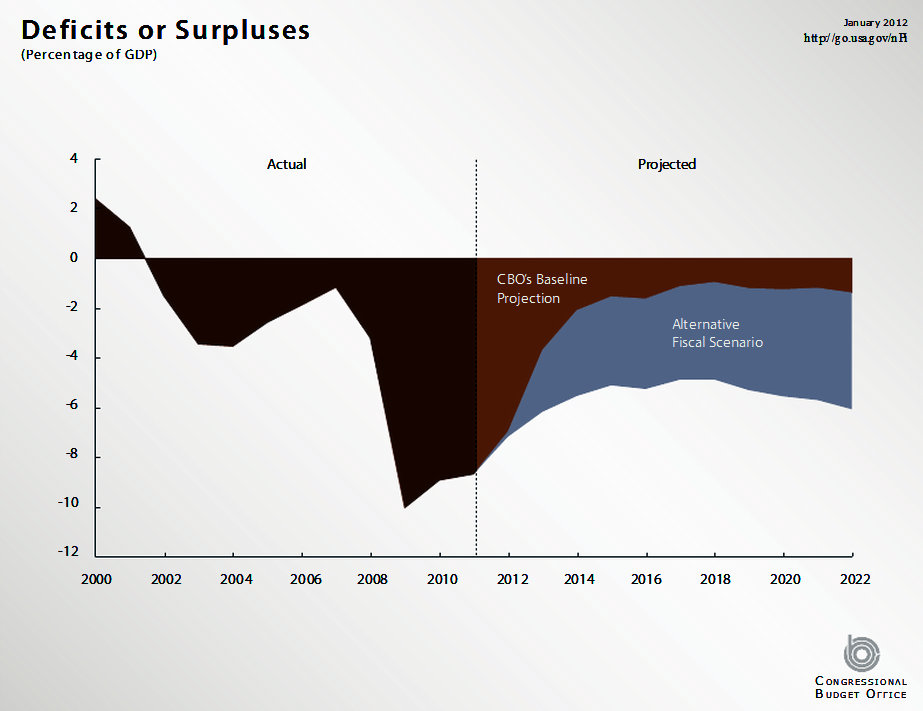 The fiscal cliff pertains to a series of actions to be taken by the federal government in early 2013 in order to reduce the national budget deficit to almost half its current value. To clarify, the budget deficit refers to the amount of money which the government owes to its creditors within a specific period of time--it is not to be confused with the national debt which is applied to pay for the accumulation of deficit. So why should this reduction in deficit affect the average American? Well, among the most significant contributors to the deficit is government spending, which will be expected to decline with the advent of the fiscal cliff: this includes a reduction in spending for defense, federal agencies, and Cabinet departments (with major social programs such as Medicaid, Social Security, and veterans' benefits remaining exempt). Furthermore, a decline in budget deficit will result in tax increases, thereby offsetting the income tax cuts of the Bush Administration as well as the payroll tax cuts implemented by the Obama Administration.
With economic stability for the next year at stake, several political stances have developed potential solutions for the fiscal cliff. For example, the Democratic party has agreed to support the extension of Bush Administration tax cuts for the bottom 98% of the economy whilst allowing for tax cuts for the top 2%, as recently confirmed in a public statement. Additionally, President Obama has expressed support for spending cuts such as $1.6 trillion in tax increases over the next decade as well as $400 million of cuts to Medicare over the same time frame. On the other hand, the Republican party has proposed to mitigate the fiscal cliff by extending the Bush-implemented tax cuts (including those for the top 2%) and by cutting the national deficit by $2.2 trillion over the next decade by reducing tax and federal expenditures such as exemptions (charity donations, loopholes, etc.) and Medicare (by raising the eligibility age), respectively.
The average American deserves to know that the fiscal cliff is not a dramatic economic cataclysm but is nonetheless quite serious. The proposals offered to quell the effects of this reduction in deficit must go into effect by the end of 2012 in order to allow for desirable mitigation. With that in mind, Americans should watch carefully for the latest updates on this volatile subject.
-Chris Cattafi, Co-Founder and Vice President of Investment Club
The fiscal cliff pertains to a series of actions to be taken by the federal government in early 2013 in order to reduce the national budget deficit to almost half its current value. To clarify, the budget deficit refers to the amount of money which the government owes to its creditors within a specific period of time--it is not to be confused with the national debt which is applied to pay for the accumulation of deficit. So why should this reduction in deficit affect the average American? Well, among the most significant contributors to the deficit is government spending, which will be expected to decline with the advent of the fiscal cliff: this includes a reduction in spending for defense, federal agencies, and Cabinet departments (with major social programs such as Medicaid, Social Security, and veterans' benefits remaining exempt). Furthermore, a decline in budget deficit will result in tax increases, thereby offsetting the income tax cuts of the Bush Administration as well as the payroll tax cuts implemented by the Obama Administration.With economic stability for the next year at stake, several political stances have developed potential solutions for the fiscal cliff. For example, the Democratic party has agreed to support the extension of Bush Administration tax cuts for the bottom 98% of the economy whilst allowing for tax cuts for the top 2%, as recently confirmed in a public statement. Additionally, President Obama has expressed support for spending cuts such as $1.6 trillion in tax increases over the next decade as well as $400 million of cuts to Medicare over the same time frame. On the other hand, the Republican party has proposed to mitigate the fiscal cliff by extending the Bush-implemented tax cuts (including those for the top 2%) and by cutting the national deficit by $2.2 trillion over the next decade by reducing tax and federal expenditures such as exemptions (charity donations, loopholes, etc.) and Medicare (by raising the eligibility age), respectively.
The average American deserves to know that the fiscal cliff is not a dramatic economic cataclysm but is nonetheless quite serious. The proposals offered to quell the effects of this reduction in deficit must go into effect by the end of 2012 in order to allow for desirable mitigation. With that in mind, Americans should watch carefully for the latest updates on this volatile subject.
-Chris Cattafi, Co-Founder and Vice President of Investment Club
Saturday, December 15, 2012
Vodafone
As we finished the trio of communications, we mentioned that Verizon is co-owned by another company: Vodafone (VOD). Vodafone also focuses on wired and wireless connectivity, specifically prepaid phones, calling cards, postpaid services (such as Verizon's major plans), and world calling cards. This company was established in 1984 as Racal Strategic Radio Limited; in 1991, however, it RCR Ltd. separated and established a new, independent, and public company called Vodafone. In 1999, the company split 5:1 (GIANT growth). The group changed its name after merging with AirTouch Comm. in 1999 but reverted to Vodafone Group Plc. in 2000. In the latter year, Vodafone worked with Bell Atlantic to create Verizon Wireless.

Our records of Vodafone date to the late 1980's, but the company saw little growth until the Information Era and the split. By 2002, stocks were barely 30% of what they were in 2000, but they were again on the rise. With its holdings growing, VOD saw sustained growth until late 2007. The recession in 2008 again caused a harsh drop in stocks of about 50%. In 2009, Verizon completed its acquisition of AllTell and begin a minor stage of growth that capped around $30.
Lately, Vodafone has been slowing down and losing EPS. Late October witnessed the beginning of investing in the company with accompanying falling stock prices. In mid-November, Comcast planned to layoff 450 employees from NBC Universal; unfortunately, the loss of profits from one major company in the sector also shakes the rest and Vodafone's stocks fell. We predicted soon thereafter that stocks would increase again from $25 to $26, and to buy then to make money. Currently, Vodafone is headed back down after meeting a peak. Once stocks hit about $25 or lower, we strongly encourage investing in the company.
Our records of Vodafone date to the late 1980's, but the company saw little growth until the Information Era and the split. By 2002, stocks were barely 30% of what they were in 2000, but they were again on the rise. With its holdings growing, VOD saw sustained growth until late 2007. The recession in 2008 again caused a harsh drop in stocks of about 50%. In 2009, Verizon completed its acquisition of AllTell and begin a minor stage of growth that capped around $30.
Lately, Vodafone has been slowing down and losing EPS. Late October witnessed the beginning of investing in the company with accompanying falling stock prices. In mid-November, Comcast planned to layoff 450 employees from NBC Universal; unfortunately, the loss of profits from one major company in the sector also shakes the rest and Vodafone's stocks fell. We predicted soon thereafter that stocks would increase again from $25 to $26, and to buy then to make money. Currently, Vodafone is headed back down after meeting a peak. Once stocks hit about $25 or lower, we strongly encourage investing in the company.
Subscribe to:
Posts (Atom)