Hello everybody! We apologize for the severe lack of posts, our schedule as students has prevented us from blogging with all of the end-of-the-year testing. However, we do come with good tidings! The LMHS Invest Club welcomes Francisco Arauz as our new Analyst, Nicholas Sepulveda as our new Vice-President and myself, Kyle Cook, as the new President!
This post primarily serves to inform you, our viewership, that we are indeed still here! More posts will be popping up as the summer progresses, and a more stable amount will follow as the following school year begins. I thank you all for the support and wish everyone a fantastic summer!
-Kyle Cook, President of Investment Club
NYSE

Another day at the Stock Market
Monday, May 27, 2013

Monday, March 11, 2013
Consumer Goods: Target (TGT), Wal-Mart (WMT), CVS (CVS), Walgreen (WAG), Home Depot (HD), Lowe's (LOW), Mattel (MAT)
It has been an amazing set of days on the Stock Market, with almost an entire week of all-time highs on the DOW Industrial Average, and we are excited to be blogging once again (we apologize for the long wait, our full-time student schedules prevent us from blogging as much as late last year)! We are going over our Consumer Goods sector today, briefly describing each company and their standings, as well as our predictions, much like the last post on pharmaceuticals!
Target (TGT) - Target is a general retail brand that was established in 1902; the current CEO is Gregg Steinhafel, and stocks sell for about $67. As we first observed statistics, we noticed a disappointing trends downwards in the last years. The recession make its impact, and as investment declined, stock prices began decreasing and hit a low of just over $58 in late 2012. Although revenue decrease slightly in late December as well, revenue for the 4th Fiscal QT was up 0.8%. Also, Target renewed their online shopping with their new Price Match Policy. With major online marketers like Amazon.com, Target introduced a program to draw more customers back to the nationwide brand, both in stores and online. We predicted strong growth following this policy, and shares have since increased to $67.34 (3/11 closing). It has been upgraded by analysts multiple times in the past two months (we were a full month ahead of them), and we continue to back the company. Growth in dividend may slow down, but we still expect long-term increases. Invest!
Wal-Mart (WMT) - Wal-Mart is also a general retail store, and was established in 1909. Stocks are a bit more expensive, topping $72. The current CEO is Gregory Wasson. Wal-Mart's advantage over many large general retail stores (including grocery in many cases), is its international presence. The stores are found everywhere in the United States, in many other countries, and, as we will discuss soon, are appearing on college campuses. Unfortunately for the company, they experienced earnings below expected, and EPS resulted in being only $1.51, instead of $1.53-1.58. In early January, Wal-Mart introduced a new contact lens program, allowing customers to purchase brand name contact lenses for a, well, Wal-Mart price. Also, Wal-Mart has been experimenting with a so-called "Wal-Mart On Campus" - a miniature version of a regular sized store (10% of a normal, 2% of a super-center), to allow college students to still benefit from the the store's low prices. Only two currently exist, but, if they are sustained with growth and more purchases, they could soon sprout on many campuses throughout the states. We encouraged investment in Wal-Mart as well, and have since made over $30 profit on 5 shares.
CVS Caremark (CVS) - CVS is a nationwide pharmacy which also sells general products. It was introduced in 1963, currently sells for $52, and is headed by CEO Larry Merlo. Stocks have been on the rise since late 2011, with relatively few bumps along the way. In January, CVS organized a further group effort to help victims of Hurricane Sandy, creating a partnership between BarnabasHealth, a local clinic group in New Jersey, and its own MinuteClinic. This temporarily allowed for strong growth in investment, but a controversy surrounding extortion via MoneyPak (Green Dot, with PayPal) caused confusion with CVS. The company, one of few still selling MoneyPak's after FBI advisories to take them off the market. These products installed a pop-up, virus-like program on your computer when used, which requested a specific domain and login, followed by a demand to pay a fine to an FBI look-alike. However, once that situation cleared up, CVS returned to its habitual growth, and has, since our own simulated investment, increased almost 6%. We continue to encourage investment, but to expect significant profits mainly in the long-term.
Walgreen (WAG) - Much like CVS, Walgreen is also a nationwide pharmacy with minor general retail. It is larger than the latter by 1300 stores, making it the largest pharmacy in the United States! Walgreen has been showing remarkable growth since taking a large hit in mid-November. To explain such large fluctuations in WAG's stock, the company lost major contracts with drug producers and distributors, forcing it to search for other, more reliable options. Fortunately for Walgreen, they are now back with stable deals. Their major distributor is Alliance Boots, providing 45% of their prescription drugs. On a more recent note (we don't have much to say about Walgreen, really), price targets were risen from $40 to $47 -- that is, until sales begin to drop. February sales were down 2.2%, and investors began taking a hit. More investors + less cash flow = smaller dividends. We projected growth in the company, and it has grown just under 4%, but we do not project significant earnings in stock investment in the short term.
Home Depot (HD) - Home Depot is a home improvement warehouse chain that was established in 1978. The current CEO is Francis Blake, and the company sells shares for over $71. Since the beginning of the year, with a new fiscal year, the company has been doing very well on the stock market. Stocks reached a year-low price in late December, but The Home Depot was labeled one of the top hiring companies with the arrival of the new year. A conspiracy appeared within HD's books, involving Lowe's and Orchard Supply (OSH) over a possible specialized monopoly on a large number of goods. Supposedly, this company was providing The Home Depot with better contracts and access to goods only they could sell; naturally, Lowe's attacked both companies, accusing the specialized sales agreement as an attempt to monopolize the home improvement market. However, last FY showed strong results, and stocks flew off the charts - the company reached a 13 year high in stock price, immediately following the earnings conference, especially considering the 34% increase in dividend for 4QT by itself. Our own stocks in the company fared excellently with the earnings report, surging 11% from our $64 purchase tag. We strongly encourage to invest in HD, as the earnings release will attract many more investors, and the ability to make good money.
Lowe's (LOW) - Lowe's is also a home improvement store, and was established in 1952. Although it is older than the former, shares are only about $40. The current CEO is Robert Niblock. LOW observed a trend similar to that of HD - a slight increase in stock price in late November (Christmas trees and decorations, anyone?), followed by another dip with the turn of the year, BUT back on the rise with the new year. It was originally downgraded to a sell status in early January, but new funding with solar companies allowed for sustained growth. Their main solar energy counterpart, Sungevity, received $125 million from investors for solar panel construction in nine states, with the largest contributions to fund California and Arizona (lots of sun). Recently, Lowe's released its earning report to the public and....was a huge hit. Stock prices began falling in the days preceding the report, expecting sub-expectation revenues. Surprisingly, FY2012 net earnings were on a significant rise - 6.5%, to hit an impressive $2 billion. Granted, The Home Depot topped more than twice that, but Lowe's did better than expected. We benefited from the surge, as our investments profited 12% since we bought them. Lowe's seems to be heading on a path to more success, but we advise to invest cautiously. The company is not one with a reputation to always do very well, so we advise caution.
Mattel (MAT) - Mattel is a toy manufacturer and distributor that sells goods on a worldwide basis. It was established in 1948, and holds a dominant share in the toy market (see the list of their current products at http://corporate.mattel.com/our-toys/default.aspx ). The current CEO is Bryan Stockton, and the mega-company sells stocks for $41. The company interestingly, has more share price fluctuations than the previous consumer good companies we discussed. The arrival of 2013 brought some stability with it, however - the American Girls 2013 catalogue was released, and quickly thereafter a new price target was set from $38 to $41. When Mattel published their earnings from the holidays, they boasted a confidant 2%. However, their main competitor, Hasbro, announced a nearly 4% dividend. Investors had already begun shifting stances towards Hasbro with the turn of the year -- they reported fewer sales, but higher earnings in 2012 -- but also announced to layoff a great number of workers in an attempt to save money (what is more important: employment or earnings?). Since these announcements, Mattel has shown consistent growth and we advise to invest in the company now. We have made 13% profit in less than two months, and expect to continue to see growth. Do not be discouraged if profits slow down; they will skyrocket with the Winter holidays, and bring increased dividends at those times.
Target (TGT) - Target is a general retail brand that was established in 1902; the current CEO is Gregg Steinhafel, and stocks sell for about $67. As we first observed statistics, we noticed a disappointing trends downwards in the last years. The recession make its impact, and as investment declined, stock prices began decreasing and hit a low of just over $58 in late 2012. Although revenue decrease slightly in late December as well, revenue for the 4th Fiscal QT was up 0.8%. Also, Target renewed their online shopping with their new Price Match Policy. With major online marketers like Amazon.com, Target introduced a program to draw more customers back to the nationwide brand, both in stores and online. We predicted strong growth following this policy, and shares have since increased to $67.34 (3/11 closing). It has been upgraded by analysts multiple times in the past two months (we were a full month ahead of them), and we continue to back the company. Growth in dividend may slow down, but we still expect long-term increases. Invest!
Wal-Mart (WMT) - Wal-Mart is also a general retail store, and was established in 1909. Stocks are a bit more expensive, topping $72. The current CEO is Gregory Wasson. Wal-Mart's advantage over many large general retail stores (including grocery in many cases), is its international presence. The stores are found everywhere in the United States, in many other countries, and, as we will discuss soon, are appearing on college campuses. Unfortunately for the company, they experienced earnings below expected, and EPS resulted in being only $1.51, instead of $1.53-1.58. In early January, Wal-Mart introduced a new contact lens program, allowing customers to purchase brand name contact lenses for a, well, Wal-Mart price. Also, Wal-Mart has been experimenting with a so-called "Wal-Mart On Campus" - a miniature version of a regular sized store (10% of a normal, 2% of a super-center), to allow college students to still benefit from the the store's low prices. Only two currently exist, but, if they are sustained with growth and more purchases, they could soon sprout on many campuses throughout the states. We encouraged investment in Wal-Mart as well, and have since made over $30 profit on 5 shares.
CVS Caremark (CVS) - CVS is a nationwide pharmacy which also sells general products. It was introduced in 1963, currently sells for $52, and is headed by CEO Larry Merlo. Stocks have been on the rise since late 2011, with relatively few bumps along the way. In January, CVS organized a further group effort to help victims of Hurricane Sandy, creating a partnership between BarnabasHealth, a local clinic group in New Jersey, and its own MinuteClinic. This temporarily allowed for strong growth in investment, but a controversy surrounding extortion via MoneyPak (Green Dot, with PayPal) caused confusion with CVS. The company, one of few still selling MoneyPak's after FBI advisories to take them off the market. These products installed a pop-up, virus-like program on your computer when used, which requested a specific domain and login, followed by a demand to pay a fine to an FBI look-alike. However, once that situation cleared up, CVS returned to its habitual growth, and has, since our own simulated investment, increased almost 6%. We continue to encourage investment, but to expect significant profits mainly in the long-term.
Walgreen (WAG) - Much like CVS, Walgreen is also a nationwide pharmacy with minor general retail. It is larger than the latter by 1300 stores, making it the largest pharmacy in the United States! Walgreen has been showing remarkable growth since taking a large hit in mid-November. To explain such large fluctuations in WAG's stock, the company lost major contracts with drug producers and distributors, forcing it to search for other, more reliable options. Fortunately for Walgreen, they are now back with stable deals. Their major distributor is Alliance Boots, providing 45% of their prescription drugs. On a more recent note (we don't have much to say about Walgreen, really), price targets were risen from $40 to $47 -- that is, until sales begin to drop. February sales were down 2.2%, and investors began taking a hit. More investors + less cash flow = smaller dividends. We projected growth in the company, and it has grown just under 4%, but we do not project significant earnings in stock investment in the short term.
Home Depot (HD) - Home Depot is a home improvement warehouse chain that was established in 1978. The current CEO is Francis Blake, and the company sells shares for over $71. Since the beginning of the year, with a new fiscal year, the company has been doing very well on the stock market. Stocks reached a year-low price in late December, but The Home Depot was labeled one of the top hiring companies with the arrival of the new year. A conspiracy appeared within HD's books, involving Lowe's and Orchard Supply (OSH) over a possible specialized monopoly on a large number of goods. Supposedly, this company was providing The Home Depot with better contracts and access to goods only they could sell; naturally, Lowe's attacked both companies, accusing the specialized sales agreement as an attempt to monopolize the home improvement market. However, last FY showed strong results, and stocks flew off the charts - the company reached a 13 year high in stock price, immediately following the earnings conference, especially considering the 34% increase in dividend for 4QT by itself. Our own stocks in the company fared excellently with the earnings report, surging 11% from our $64 purchase tag. We strongly encourage to invest in HD, as the earnings release will attract many more investors, and the ability to make good money.
Lowe's (LOW) - Lowe's is also a home improvement store, and was established in 1952. Although it is older than the former, shares are only about $40. The current CEO is Robert Niblock. LOW observed a trend similar to that of HD - a slight increase in stock price in late November (Christmas trees and decorations, anyone?), followed by another dip with the turn of the year, BUT back on the rise with the new year. It was originally downgraded to a sell status in early January, but new funding with solar companies allowed for sustained growth. Their main solar energy counterpart, Sungevity, received $125 million from investors for solar panel construction in nine states, with the largest contributions to fund California and Arizona (lots of sun). Recently, Lowe's released its earning report to the public and....was a huge hit. Stock prices began falling in the days preceding the report, expecting sub-expectation revenues. Surprisingly, FY2012 net earnings were on a significant rise - 6.5%, to hit an impressive $2 billion. Granted, The Home Depot topped more than twice that, but Lowe's did better than expected. We benefited from the surge, as our investments profited 12% since we bought them. Lowe's seems to be heading on a path to more success, but we advise to invest cautiously. The company is not one with a reputation to always do very well, so we advise caution.
Mattel (MAT) - Mattel is a toy manufacturer and distributor that sells goods on a worldwide basis. It was established in 1948, and holds a dominant share in the toy market (see the list of their current products at http://corporate.mattel.com/our-toys/default.aspx ). The current CEO is Bryan Stockton, and the mega-company sells stocks for $41. The company interestingly, has more share price fluctuations than the previous consumer good companies we discussed. The arrival of 2013 brought some stability with it, however - the American Girls 2013 catalogue was released, and quickly thereafter a new price target was set from $38 to $41. When Mattel published their earnings from the holidays, they boasted a confidant 2%. However, their main competitor, Hasbro, announced a nearly 4% dividend. Investors had already begun shifting stances towards Hasbro with the turn of the year -- they reported fewer sales, but higher earnings in 2012 -- but also announced to layoff a great number of workers in an attempt to save money (what is more important: employment or earnings?). Since these announcements, Mattel has shown consistent growth and we advise to invest in the company now. We have made 13% profit in less than two months, and expect to continue to see growth. Do not be discouraged if profits slow down; they will skyrocket with the Winter holidays, and bring increased dividends at those times.
Saturday, February 16, 2013
Pharmaceuticals: Accuray (ARAY), AstraZeneca (ANZ), BioTime (BTX), DepoMed (DEPO), Johnson & Johnson (JNJ), Pfizer (PFE)
Welcome back! We hope everyone had a wonderful Valentine's Day and apologize for blogging irregularly! This post will be rather lengthy and will include all the pharmaceutical companies we have yet to speak about.
Accuray (ARAY): Accuray focuses on robotic radio-surgery systems, and was established in 1990. The CEO is Euan Thompson. This company currently sells stocks for about $4.50, confirming our predictions over two months ago prices would severely fall. Since the beginning of the recession in 2008, Accuray has not done well; it sold shares for almost $30 but the cuts in employment and profits caused major problems, which consequently took their toll on the stock market. In late November, it was first rated an 'underperform' by many analysts. Releases later in 2012 showed that profits were only a mere 50% of the expected performance. When we first looked at the company, it was selling for $6.49, but we advised our members to not invest, and it has since hit a trough. We expect a slight increase in profits over last quarter, depending on lab results, but still do not advise investing in ARAY.
AstraZeneca (ANZ): Established in 1992, AztraZeneca is a tad younger than Accuray, and instead focuses on prescription medicine (you may recall "AztraZeneca may be able to help" from many commercials). The current CEO is Simon Lowth. Shares of ANZ currently sell for about $45-46, about the same as prices since 1998. We expected a strong surge of growth at the end of last year, following the signing of new major contracts and promising drug trials. Indeed, until late-January, AztraZeneca experienced strong growth on the market. Unfortunately, analysts predicted below-prediction earnings and share prices have been falling since. As the news wear off, we expect more investment into the company and expect prices to increase again.
BioTime (BTX): BioTime is a company established in 1990, and now headed by Michael West, that concentrates on regenerative medicine, including but not limited to stem cells and neural diseases. As with AztraZeneca, we predicted sustained growth due to good drug results. At this same time, we bought stocks at $3.29, and they reached a high of about $4.70. This was a 42% increase over our purchase price, and a significant source of income in our simulated investments (with $50,000, one could have bought more than 15,000 stocks and made $20,000 in profits). More companies are now approved for stem-cell research and testing, creating more competition. Although BioTime is one of the strongest companies in the industry, investors are now also visiting other options that may prove more lucrative. We advise to remain neutral in investing in BTX; stock prices should not fluctuate significantly over the next few weeks, but we expect slight growth in the long term.
DepoMed (DEPO): DepoMed focuses mainly on central nervous system research and disease treatment. The company was established in 1995 and the current CEO is James Shoeneck. Our first stock market impression of DEPO was of severe instability, alternating up to 75% in a single year. However, more recent observations suggest improving results, thus more investors. After hosting a medical conference, they were named leader in pain medication, and have since gradually gained investor momentum, gaining about 18%. We encourage investment in DepoMed, but make sure to sell your stocks if another company releases excellent results.
Johnson & Johnson (JNJ): Johnson and Johnson is one of the older pharmaceutical companies, dating to 1887, taking a head start into development of health care products. Headed by CEO Alex Gorsky, JNJ sells stocks for about $76. The company saw tremendous sustained growth with the Information Era and slight yet gradual growth since. One of the major results sending JNJ above the $60 was the announcement of the expansion of the psoriasis drug, which treats multiple immune inflammatory disorders. As more suppliers and hospitals buy the drug, the company keeps gaining investors and stock price is about to reach an all-time high. We advise to invest in the company, unless lawsuits from the recent hip replacement recalls cause lawsuits.
Pfizer (PFE): The oldest of our group, the 1849 Pfizer (originally known as Charles Pfizer & Co.), focuses on disease treatments and medicine. The company is headed by Ian Read and stocks sell for about $27. PFE held a constant decline of investment from the Information Era until the 2008 Recession, and now seems to maintain constant growth. The decision to acquire NextWave Pharmaceuticals late last year allowed Pfizer to gain new patents and new grounds in the market, including strong foundations for ADHD medication. The recent split between Pfizer and its animal division, Zoetis (ZTS) is attracting more investors as the focus of the company turns to humans only. Releases of testing for the Lyrica drugs, aimed at curing fibromyalgia (chronic pain), and improved results on stage 3 and 4 cancer also draw in investors. We also encourage investment in PFE and expect growth over the next months.
Accuray (ARAY): Accuray focuses on robotic radio-surgery systems, and was established in 1990. The CEO is Euan Thompson. This company currently sells stocks for about $4.50, confirming our predictions over two months ago prices would severely fall. Since the beginning of the recession in 2008, Accuray has not done well; it sold shares for almost $30 but the cuts in employment and profits caused major problems, which consequently took their toll on the stock market. In late November, it was first rated an 'underperform' by many analysts. Releases later in 2012 showed that profits were only a mere 50% of the expected performance. When we first looked at the company, it was selling for $6.49, but we advised our members to not invest, and it has since hit a trough. We expect a slight increase in profits over last quarter, depending on lab results, but still do not advise investing in ARAY.
AstraZeneca (ANZ): Established in 1992, AztraZeneca is a tad younger than Accuray, and instead focuses on prescription medicine (you may recall "AztraZeneca may be able to help" from many commercials). The current CEO is Simon Lowth. Shares of ANZ currently sell for about $45-46, about the same as prices since 1998. We expected a strong surge of growth at the end of last year, following the signing of new major contracts and promising drug trials. Indeed, until late-January, AztraZeneca experienced strong growth on the market. Unfortunately, analysts predicted below-prediction earnings and share prices have been falling since. As the news wear off, we expect more investment into the company and expect prices to increase again.
BioTime (BTX): BioTime is a company established in 1990, and now headed by Michael West, that concentrates on regenerative medicine, including but not limited to stem cells and neural diseases. As with AztraZeneca, we predicted sustained growth due to good drug results. At this same time, we bought stocks at $3.29, and they reached a high of about $4.70. This was a 42% increase over our purchase price, and a significant source of income in our simulated investments (with $50,000, one could have bought more than 15,000 stocks and made $20,000 in profits). More companies are now approved for stem-cell research and testing, creating more competition. Although BioTime is one of the strongest companies in the industry, investors are now also visiting other options that may prove more lucrative. We advise to remain neutral in investing in BTX; stock prices should not fluctuate significantly over the next few weeks, but we expect slight growth in the long term.
DepoMed (DEPO): DepoMed focuses mainly on central nervous system research and disease treatment. The company was established in 1995 and the current CEO is James Shoeneck. Our first stock market impression of DEPO was of severe instability, alternating up to 75% in a single year. However, more recent observations suggest improving results, thus more investors. After hosting a medical conference, they were named leader in pain medication, and have since gradually gained investor momentum, gaining about 18%. We encourage investment in DepoMed, but make sure to sell your stocks if another company releases excellent results.
Johnson & Johnson (JNJ): Johnson and Johnson is one of the older pharmaceutical companies, dating to 1887, taking a head start into development of health care products. Headed by CEO Alex Gorsky, JNJ sells stocks for about $76. The company saw tremendous sustained growth with the Information Era and slight yet gradual growth since. One of the major results sending JNJ above the $60 was the announcement of the expansion of the psoriasis drug, which treats multiple immune inflammatory disorders. As more suppliers and hospitals buy the drug, the company keeps gaining investors and stock price is about to reach an all-time high. We advise to invest in the company, unless lawsuits from the recent hip replacement recalls cause lawsuits.
Pfizer (PFE): The oldest of our group, the 1849 Pfizer (originally known as Charles Pfizer & Co.), focuses on disease treatments and medicine. The company is headed by Ian Read and stocks sell for about $27. PFE held a constant decline of investment from the Information Era until the 2008 Recession, and now seems to maintain constant growth. The decision to acquire NextWave Pharmaceuticals late last year allowed Pfizer to gain new patents and new grounds in the market, including strong foundations for ADHD medication. The recent split between Pfizer and its animal division, Zoetis (ZTS) is attracting more investors as the focus of the company turns to humans only. Releases of testing for the Lyrica drugs, aimed at curing fibromyalgia (chronic pain), and improved results on stage 3 and 4 cancer also draw in investors. We also encourage investment in PFE and expect growth over the next months.
Sunday, January 20, 2013
...and we are back! Abbott Labs and AbbVie
Happy New Year! The Investment Club is back for more discussion about the stock market and the economy, and we hope reading our blog is one of your New Year's resolutions! :)
We are starting off the year with, as we promised, Pharmaceuticals. These are companies that focus on developmental medicine, drug testing and production, medical products, and health or nutritional health products. As we will begin discussing shortly, success for these companies depend largely on testing results, competition, health conferences, monopolies, and company splits. The most recent split is our focus of research today, Abbott Labs (ABT) and AbbVie (ABBV).
 The first of the two companies, Abbott Laboratories, works on the discovery and development of health care products, which include both medical and nutritional products. The company was established in 1900 and is now headed by CEO Miles White. Since the company was made public, it saw little growth until the Information Era (1998). This epoch of new industry and technology created an amazing boom in growth, and, accompanied by a 2:1 split, increased revenue and EPS for ABT. In late November 2012, Abbott Labs was given a 'buy' stock rating considering its 25% increase in equity (a company's balance sheet includes 'assets = liabilities [debt] + equity [gains, money owned]). A few days later, it announced a split within the company to produce a new independent company, AbbVie. Now, Abbott Labs is doing well, and we expect continued growth. We bought some stocks (simulated on Investopedia) at $30.07, and sold them on Friday before closing, at $32.74.
 Our other company for today, AbbVie, is the latest 'offspring' of Abbott Laboratories. This company was created in 2012 from the split and began trading on the market on January 2nd, 2013. AbbVie focuses more on specialized drug testing, including treatments for arthritis, HIV, cystic fibrosis, Parkinson's, other major degenerative diseases, and many more. Unfortunately, we cannot delve far into the stock history of ABBV as it shares all history with ABT up until its stock independence. However, we can say that AbbVie is showing prominent efforts already. It was considered one of the best pharmaceutical investments for 2013, and it is a company we are already investing more in. We bought 8 stocks are $35 a week ago, and they now sit at $37.32, with about 40 more to be bought on Tuesday.
We are starting off the year with, as we promised, Pharmaceuticals. These are companies that focus on developmental medicine, drug testing and production, medical products, and health or nutritional health products. As we will begin discussing shortly, success for these companies depend largely on testing results, competition, health conferences, monopolies, and company splits. The most recent split is our focus of research today, Abbott Labs (ABT) and AbbVie (ABBV).
 The first of the two companies, Abbott Laboratories, works on the discovery and development of health care products, which include both medical and nutritional products. The company was established in 1900 and is now headed by CEO Miles White. Since the company was made public, it saw little growth until the Information Era (1998). This epoch of new industry and technology created an amazing boom in growth, and, accompanied by a 2:1 split, increased revenue and EPS for ABT. In late November 2012, Abbott Labs was given a 'buy' stock rating considering its 25% increase in equity (a company's balance sheet includes 'assets = liabilities [debt] + equity [gains, money owned]). A few days later, it announced a split within the company to produce a new independent company, AbbVie. Now, Abbott Labs is doing well, and we expect continued growth. We bought some stocks (simulated on Investopedia) at $30.07, and sold them on Friday before closing, at $32.74.
 Our other company for today, AbbVie, is the latest 'offspring' of Abbott Laboratories. This company was created in 2012 from the split and began trading on the market on January 2nd, 2013. AbbVie focuses more on specialized drug testing, including treatments for arthritis, HIV, cystic fibrosis, Parkinson's, other major degenerative diseases, and many more. Unfortunately, we cannot delve far into the stock history of ABBV as it shares all history with ABT up until its stock independence. However, we can say that AbbVie is showing prominent efforts already. It was considered one of the best pharmaceutical investments for 2013, and it is a company we are already investing more in. We bought 8 stocks are $35 a week ago, and they now sit at $37.32, with about 40 more to be bought on Tuesday.
Tuesday, December 18, 2012
Facebook: Blue in Person, Gold in Investment
Happy Tuesday to everyone! First, I would like to congratulate our Vice-President, Chris Cattafi, on his acceptance to NYU! Also, we know everyone is busy over the holidays therefore this will be our last post of the calendar year. We wish everyone Happy Holidays, Merry Christmas, and a Happy New Year (full of investing ;) ).
 Our post today is about social network giant Facebook (FB). First established to compare people, and then as a social media site reserved exclusively for top-tier universities, Facebook now has over one billion users every month. Taken from a Harvard dorm room, the company established and run by CEO Mark Zuckerberg since 2004 is the epitome of modern online communications. Since the conglomerate is free, FB builds its revenue from advertising, lots and lots of advertising. For those of you who use Facebook, you most likely notice the right column filled with ads, often times specialized. You may also notice throughout the site the ability to advertise, create a page for a business, and even promote one's recently posted status update to ensure everyone will see it! These abilities, some of them quite ridiculous, build the bulk of revenues, and the recent addition of more advertising opportunities are sending stocks skyrocketing.
As we look at Facebook's stock history, we see a sharp drop since the beginning, a slight curve back up, and a drop down towards $20 a share. We all remember Facebook's first day on the market; easily one of the biggest failures, sinking about $12 in a week. Stocks have again been falling since July, but with new advertising campaigns are on the rise again.
In late October, Facebook sought such new programs to increase profits, investment, and overall reliability on the stock market. The newly announced campaign allowed Facebook to open at $24 on October 24th, while it closed at $20 on the 23rd. This 25% increase slowly fell back down towards mid-November, but is now tremendously rising again. When hitting a monthly low, Facebook predicted less revenue than the previous quarter. Fortunately (and for us), I predicted that stocks would quickly rise again -- we bought 90 shares of FB on the Investopedia Stock Simulator priced at $22.34 each nearly a month ago. This fairly large investment, of over $2000, has certainly paid off. When starting to write this, I sold all 90 shares at $27.81, in accordance to my predicted jump upwards. The difference between buy/sell amounts to a profit of almost $500, an outstanding 25%. Now is a better time than ever to invest in Facebook: it is headed back into the top of the market and we expect even more growth and profits over the next year. Perhaps a New Year's resolution could be to invest more in FB!
Thanks for reading our posts about the Stock Market and the global economy. We will write again in January to analyze Pharmaceuticals, and follow with Consumer Goods to analyze holiday shopping a few weeks later. With that, the Investment Club at LMHS wishes everyone Happy Holidays and a Happy New Year!!!
Our post today is about social network giant Facebook (FB). First established to compare people, and then as a social media site reserved exclusively for top-tier universities, Facebook now has over one billion users every month. Taken from a Harvard dorm room, the company established and run by CEO Mark Zuckerberg since 2004 is the epitome of modern online communications. Since the conglomerate is free, FB builds its revenue from advertising, lots and lots of advertising. For those of you who use Facebook, you most likely notice the right column filled with ads, often times specialized. You may also notice throughout the site the ability to advertise, create a page for a business, and even promote one's recently posted status update to ensure everyone will see it! These abilities, some of them quite ridiculous, build the bulk of revenues, and the recent addition of more advertising opportunities are sending stocks skyrocketing.As we look at Facebook's stock history, we see a sharp drop since the beginning, a slight curve back up, and a drop down towards $20 a share. We all remember Facebook's first day on the market; easily one of the biggest failures, sinking about $12 in a week. Stocks have again been falling since July, but with new advertising campaigns are on the rise again.
In late October, Facebook sought such new programs to increase profits, investment, and overall reliability on the stock market. The newly announced campaign allowed Facebook to open at $24 on October 24th, while it closed at $20 on the 23rd. This 25% increase slowly fell back down towards mid-November, but is now tremendously rising again. When hitting a monthly low, Facebook predicted less revenue than the previous quarter. Fortunately (and for us), I predicted that stocks would quickly rise again -- we bought 90 shares of FB on the Investopedia Stock Simulator priced at $22.34 each nearly a month ago. This fairly large investment, of over $2000, has certainly paid off. When starting to write this, I sold all 90 shares at $27.81, in accordance to my predicted jump upwards. The difference between buy/sell amounts to a profit of almost $500, an outstanding 25%. Now is a better time than ever to invest in Facebook: it is headed back into the top of the market and we expect even more growth and profits over the next year. Perhaps a New Year's resolution could be to invest more in FB!
Thanks for reading our posts about the Stock Market and the global economy. We will write again in January to analyze Pharmaceuticals, and follow with Consumer Goods to analyze holiday shopping a few weeks later. With that, the Investment Club at LMHS wishes everyone Happy Holidays and a Happy New Year!!!
Sunday, December 16, 2012
What Is The Fiscal Cliff?
Welcome back, everyone! Today, we are going to discuss an esoteric topic that currently leaves much of the American public in confusion: the Fiscal Cliff. Indeed, economists have predicted that the end of 2012 will bring about a dramatic, apocalyptic-sounding event known as the fiscal cliff. But as a statistic would indicate, 80% of Americans are left with a simple question on their minds: what IS the fiscal cliff?
 The fiscal cliff pertains to a series of actions to be taken by the federal government in early 2013 in order to reduce the national budget deficit to almost half its current value. To clarify, the budget deficit refers to the amount of money which the government owes to its creditors within a specific period of time--it is not to be confused with the national debt which is applied to pay for the accumulation of deficit. So why should this reduction in deficit affect the average American? Well, among the most significant contributors to the deficit is government spending, which will be expected to decline with the advent of the fiscal cliff: this includes a reduction in spending for defense, federal agencies, and Cabinet departments (with major social programs such as Medicaid, Social Security, and veterans' benefits remaining exempt). Furthermore, a decline in budget deficit will result in tax increases, thereby offsetting the income tax cuts of the Bush Administration as well as the payroll tax cuts implemented by the Obama Administration.
With economic stability for the next year at stake, several political stances have developed potential solutions for the fiscal cliff. For example, the Democratic party has agreed to support the extension of Bush Administration tax cuts for the bottom 98% of the economy whilst allowing for tax cuts for the top 2%, as recently confirmed in a public statement. Additionally, President Obama has expressed support for spending cuts such as $1.6 trillion in tax increases over the next decade as well as $400 million of cuts to Medicare over the same time frame. On the other hand, the Republican party has proposed to mitigate the fiscal cliff by extending the Bush-implemented tax cuts (including those for the top 2%) and by cutting the national deficit by $2.2 trillion over the next decade by reducing tax and federal expenditures such as exemptions (charity donations, loopholes, etc.) and Medicare (by raising the eligibility age), respectively.
The average American deserves to know that the fiscal cliff is not a dramatic economic cataclysm but is nonetheless quite serious. The proposals offered to quell the effects of this reduction in deficit must go into effect by the end of 2012 in order to allow for desirable mitigation. With that in mind, Americans should watch carefully for the latest updates on this volatile subject.
-Chris Cattafi, Co-Founder and Vice President of Investment Club
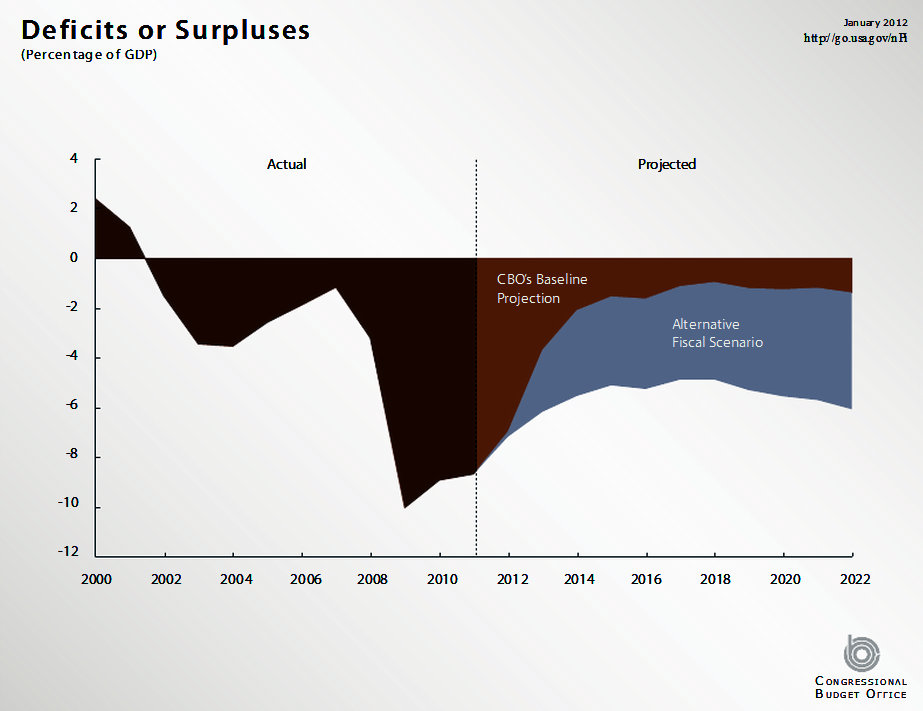 The fiscal cliff pertains to a series of actions to be taken by the federal government in early 2013 in order to reduce the national budget deficit to almost half its current value. To clarify, the budget deficit refers to the amount of money which the government owes to its creditors within a specific period of time--it is not to be confused with the national debt which is applied to pay for the accumulation of deficit. So why should this reduction in deficit affect the average American? Well, among the most significant contributors to the deficit is government spending, which will be expected to decline with the advent of the fiscal cliff: this includes a reduction in spending for defense, federal agencies, and Cabinet departments (with major social programs such as Medicaid, Social Security, and veterans' benefits remaining exempt). Furthermore, a decline in budget deficit will result in tax increases, thereby offsetting the income tax cuts of the Bush Administration as well as the payroll tax cuts implemented by the Obama Administration.
With economic stability for the next year at stake, several political stances have developed potential solutions for the fiscal cliff. For example, the Democratic party has agreed to support the extension of Bush Administration tax cuts for the bottom 98% of the economy whilst allowing for tax cuts for the top 2%, as recently confirmed in a public statement. Additionally, President Obama has expressed support for spending cuts such as $1.6 trillion in tax increases over the next decade as well as $400 million of cuts to Medicare over the same time frame. On the other hand, the Republican party has proposed to mitigate the fiscal cliff by extending the Bush-implemented tax cuts (including those for the top 2%) and by cutting the national deficit by $2.2 trillion over the next decade by reducing tax and federal expenditures such as exemptions (charity donations, loopholes, etc.) and Medicare (by raising the eligibility age), respectively.
The average American deserves to know that the fiscal cliff is not a dramatic economic cataclysm but is nonetheless quite serious. The proposals offered to quell the effects of this reduction in deficit must go into effect by the end of 2012 in order to allow for desirable mitigation. With that in mind, Americans should watch carefully for the latest updates on this volatile subject.
-Chris Cattafi, Co-Founder and Vice President of Investment Club
Saturday, December 15, 2012
Vodafone
As we finished the trio of communications, we mentioned that Verizon is co-owned by another company: Vodafone (VOD). Vodafone also focuses on wired and wireless connectivity, specifically prepaid phones, calling cards, postpaid services (such as Verizon's major plans), and world calling cards. This company was established in 1984 as Racal Strategic Radio Limited; in 1991, however, it RCR Ltd. separated and established a new, independent, and public company called Vodafone. In 1999, the company split 5:1 (GIANT growth). The group changed its name after merging with AirTouch Comm. in 1999 but reverted to Vodafone Group Plc. in 2000. In the latter year, Vodafone worked with Bell Atlantic to create Verizon Wireless.

Our records of Vodafone date to the late 1980's, but the company saw little growth until the Information Era and the split. By 2002, stocks were barely 30% of what they were in 2000, but they were again on the rise. With its holdings growing, VOD saw sustained growth until late 2007. The recession in 2008 again caused a harsh drop in stocks of about 50%. In 2009, Verizon completed its acquisition of AllTell and begin a minor stage of growth that capped around $30.
Lately, Vodafone has been slowing down and losing EPS. Late October witnessed the beginning of investing in the company with accompanying falling stock prices. In mid-November, Comcast planned to layoff 450 employees from NBC Universal; unfortunately, the loss of profits from one major company in the sector also shakes the rest and Vodafone's stocks fell. We predicted soon thereafter that stocks would increase again from $25 to $26, and to buy then to make money. Currently, Vodafone is headed back down after meeting a peak. Once stocks hit about $25 or lower, we strongly encourage investing in the company.

Our records of Vodafone date to the late 1980's, but the company saw little growth until the Information Era and the split. By 2002, stocks were barely 30% of what they were in 2000, but they were again on the rise. With its holdings growing, VOD saw sustained growth until late 2007. The recession in 2008 again caused a harsh drop in stocks of about 50%. In 2009, Verizon completed its acquisition of AllTell and begin a minor stage of growth that capped around $30.
Lately, Vodafone has been slowing down and losing EPS. Late October witnessed the beginning of investing in the company with accompanying falling stock prices. In mid-November, Comcast planned to layoff 450 employees from NBC Universal; unfortunately, the loss of profits from one major company in the sector also shakes the rest and Vodafone's stocks fell. We predicted soon thereafter that stocks would increase again from $25 to $26, and to buy then to make money. Currently, Vodafone is headed back down after meeting a peak. Once stocks hit about $25 or lower, we strongly encourage investing in the company.
Monday, December 10, 2012
Verizon: Mobile Dominance on the Horizon
To finish our triad of the three major mobile service players, we are looking at Verizon Communications (VZ). Verizon is actually co-owned by VZ and Vodafone (VOD), which we will analyze later this week! To start off, Verizon was established in 1983, the same year as AT&T. The company, which focuses on wired and wireless communications, specializes in cellular providing, network cards/ mobile USB data ports, home networks and providers, as well as business solutions through Verizon Enterprise, comparable to AT&T Enterprise and Sprint Business; although Verizon offers other services, these comprise the majority which affect the business and financial changes we observe.
 Right from the beginning, Verizon exhibited tremendous growth. Quintupling within a decade in the late 20th century, and tripling yet again into the Information Era to a record $63 a share, Verizon is easily one of the best growing companies we have observed, at least in early stages. Unfortunately, the end of the Information Era (the Internet boom and technological excitements between 1999-2001) also marked the end of this supreme stock reign, as stocks fell 50%. After seeing newfound growth from 2006 to 2007 and early 2008, the Recession hit and fell back to 2002 levels. Verizon, however, is now selling for $44.03 (similar to pre-recession costs). When we initially studied the company in recent times, we began in late October and early November, with traces of a steepening decline. Fortunately, we bought in mid-November when stocks hit their low and begin rising again. The only significant event in November was the case again Verizon Wireless (note the difference, --Communications and --Wireless). Verizon Wireless asked its two parent companies, Verizon Comm. and Vodafone, for a bailout of $17 billion, but instead of, well, bailing itself out, it spent it on further wireless developments. Even though this situation is like the Federal Government suing Bank of America, Verizon Wireless was forced to pay $8.5 billion each to Verizon Comm. and the latter.
As Verizon expands Verizon Wireless and improves the 4G networks and availability, as well as allow more competitive prices (remember that no company may monopolize a market and drive others out of business), the company will continue to grow. The expenditure of buying T-Mobile could also prove a worthy decision to aid with the expansion of the company globally. We currently expect Verizon to slow down a bit and for stocks to depreciate value, but they will quickly swing back up. Buy while cheap! We bought our stocks on Investopedia in mid-November when stocks hit their low, and on just a few shares have made $18. This is certainly a company worth investing, both in the short- and long-terms.
As Verizon expands Verizon Wireless and improves the 4G networks and availability, as well as allow more competitive prices (remember that no company may monopolize a market and drive others out of business), the company will continue to grow. The expenditure of buying T-Mobile could also prove a worthy decision to aid with the expansion of the company globally. We currently expect Verizon to slow down a bit and for stocks to depreciate value, but they will quickly swing back up. Buy while cheap! We bought our stocks on Investopedia in mid-November when stocks hit their low, and on just a few shares have made $18. This is certainly a company worth investing, both in the short- and long-terms.
Sunday, December 9, 2012
Oil Today: A Slippery Situation?
Welcome back, everyone! Today, we're going to discuss one of modern society's most treasured and versatile resources: oil. Over the past 10 years, oil prices worldwide have skyrocketed to unprecedented proportions, motivating drastic actions by some nations to reduce dependency on oil; the ambivalent success of this transition has created some stability. Nonetheless, the price of oil remains subject to turbulence and instability as a result of several political complications.
Among the world's major commodities, oil is particularly driven by politics. Indeed, the political affairs of individual nations hold the largest influence over the oil industry; in the wake of the monumental political turmoil in the Middle East (the source of 33% of the world's know oil supply), this is not a good sign. As of recently, some Middle Eastern militia groups have attempted to seize control of certain key oil-producing nations, creating a precarious situation for the global oil market. Similarly, the potential for domestic and offshore drilling in the United States has generated a fair amount of controversy. Indeed, parts of the Gulf of Mexico, the southwestern U.S and Alaska harbor immense deposits of oil and natural gas, some of which remain untapped (and others have been drilled by foreign countries such as China and Russia. This is the result of the American federal government's inability to invest in the domestic oil industry, causing not only an increased reliance on imported oil, but also a degradation and lack of development of oil drilling technology; the latter is to blame for such events as the infamous BP oil spill of 2009; in this ecological disaster, a malfunction at a decades-old oil well operated by BP in the Gulf of Mexico led to a massive contamination of huge expanses of ocean, damaging not only local ecosystems but also local fishing industries. Likewise, the construction of an oil pipeline in the Alaskan wilderness has received backlash by environmentalists, due to its supposed disruptive effect on local ecosystems.
As one of modern civilization's most valued resources, the trade of oil holds an especially critical role in international political affairs. It should thus come as no surprise that the price of oil is largely subject to influence by various political factors. It has served as both a source of violence and conflict as well as a source of innovation and prosperity. With that in mind, one should closely watch the current affairs of the world's largest oil exporters (i.e. the Middle East, Russia, China) for a good forecast of fluctuations in oil prices.
-Chris Cattafi, Investment Club Co-Founder and Vice President
Among the world's major commodities, oil is particularly driven by politics. Indeed, the political affairs of individual nations hold the largest influence over the oil industry; in the wake of the monumental political turmoil in the Middle East (the source of 33% of the world's know oil supply), this is not a good sign. As of recently, some Middle Eastern militia groups have attempted to seize control of certain key oil-producing nations, creating a precarious situation for the global oil market. Similarly, the potential for domestic and offshore drilling in the United States has generated a fair amount of controversy. Indeed, parts of the Gulf of Mexico, the southwestern U.S and Alaska harbor immense deposits of oil and natural gas, some of which remain untapped (and others have been drilled by foreign countries such as China and Russia. This is the result of the American federal government's inability to invest in the domestic oil industry, causing not only an increased reliance on imported oil, but also a degradation and lack of development of oil drilling technology; the latter is to blame for such events as the infamous BP oil spill of 2009; in this ecological disaster, a malfunction at a decades-old oil well operated by BP in the Gulf of Mexico led to a massive contamination of huge expanses of ocean, damaging not only local ecosystems but also local fishing industries. Likewise, the construction of an oil pipeline in the Alaskan wilderness has received backlash by environmentalists, due to its supposed disruptive effect on local ecosystems.
As one of modern civilization's most valued resources, the trade of oil holds an especially critical role in international political affairs. It should thus come as no surprise that the price of oil is largely subject to influence by various political factors. It has served as both a source of violence and conflict as well as a source of innovation and prosperity. With that in mind, one should closely watch the current affairs of the world's largest oil exporters (i.e. the Middle East, Russia, China) for a good forecast of fluctuations in oil prices.
-Chris Cattafi, Investment Club Co-Founder and Vice President
Saturday, December 8, 2012
Sprint: Mobile Not for Long
Welcome back everyone! Today we are continuing our segment on the largest mobile companies in the US, with the clash between AT&T (already posted), Sprint, and Verizon. Today's company is the oldest and the weakest - Sprint Nextel (S). Over 100 years old, Sprint was established in 1899 as the Brown Telephone Company. The company changed names from Brown Tel. to United Utilities and to United Telecom, at the same time it completed the first transnational fiber optic line in the mid-1980s. At this point, while AT&T and Verizon were puny startups while Sprint charted the future of mobile telecommunications and, in 1989, laid the first transatlantic fiber optic cable. This was the company's peak. Since then, Sprint oscillated to the top but now faces the harsh curve downwards, possibly never shooting back up. Other companies, including the two major rivals we discuss, took over the market at the turn of the century. The Information Era marked the end of a century of innovation and a fall to stagnant, uncompetitive times for the company masked by a final name change to Sprint.
 As we look at Sprint's stock history (we only looked since the Information Era, we know there was tremendous growth prior), we noticed a disappointing decline in the price of shares. The end of the era's boost hit hard and the company never fully gained again levels from the 1900s. Fortunately, Sprint gained some ground again into 2006 and 2007. Since 2007, S has been headed by CEO Dan Hesse; mix a change in management in late 2007 with a recession in 2008 and the solution is devastating. Sprint, a company which sold shares for about $20 in 2007, now sells them for a weak $5-6. Unfortunately, Sprint Nextel seems unable to recoup from this devastating loss, and is on the road to failure. In late October, the company was suffering graver losses than usual and was forced to sell 70% of the company to Japanese Softbank Corp. Once Sprint files for bankruptcy again, we expect JSC to buy out the rest of the company or for another buyer to make the purchase. In the case of that happening, we hope services remain available in the US as to not have major employment and economic repercussions.
Although we know the company needs a revival of monetary trade, we advise against investing in S. Sprint Nextel is currently in a vicious cycle: loss of customers, loss of sales, loss of revenue, decline of EPS, less investing, and repeat. Investing in Sprint may revitalize the company a tad (if thousands of investors were to suddenly gain interest, which is highly unlikely) but for individuals looking for profit, this misses the target. This would be a waste of money and time in the long term.
 As we look at Sprint's stock history (we only looked since the Information Era, we know there was tremendous growth prior), we noticed a disappointing decline in the price of shares. The end of the era's boost hit hard and the company never fully gained again levels from the 1900s. Fortunately, Sprint gained some ground again into 2006 and 2007. Since 2007, S has been headed by CEO Dan Hesse; mix a change in management in late 2007 with a recession in 2008 and the solution is devastating. Sprint, a company which sold shares for about $20 in 2007, now sells them for a weak $5-6. Unfortunately, Sprint Nextel seems unable to recoup from this devastating loss, and is on the road to failure. In late October, the company was suffering graver losses than usual and was forced to sell 70% of the company to Japanese Softbank Corp. Once Sprint files for bankruptcy again, we expect JSC to buy out the rest of the company or for another buyer to make the purchase. In the case of that happening, we hope services remain available in the US as to not have major employment and economic repercussions.
Although we know the company needs a revival of monetary trade, we advise against investing in S. Sprint Nextel is currently in a vicious cycle: loss of customers, loss of sales, loss of revenue, decline of EPS, less investing, and repeat. Investing in Sprint may revitalize the company a tad (if thousands of investors were to suddenly gain interest, which is highly unlikely) but for individuals looking for profit, this misses the target. This would be a waste of money and time in the long term.
Tuesday, December 4, 2012
Mobile Showdown - AT&T
Our records date back to the mid-1980's, when AT&T was established in 1983. Until 1999 the company showed tremendous, and unbelievably positive growth. Since the turn of the century, and the end of the Information Era madness, stocks fell back down but restrengthened before the recession in 2008. Fortunately, however, stocks recuperated into 2012; unfortunately, a stark contrast to early 2012, the latter part of the year began showing decline in stock price. While these long-term occurrences helped us to predict future economic growth, more recent activity shows social issues, rather than those economic, provoke AT&T's current stock instability. On November 1st, AT&T and T-Mobile spread a rumor of a possible liaison, but this enacted few new trading trends as the other companies had similarly exposed such claims. Note that we are not analyzing T-Mobile; it is the only company of the top four to have lost competitive vigor (we will discuss it in later posts). Back to T and social issues, mid-November witnessed that AT&T was voted the best employer of LGBT. In modern society, this remains a highly controversial debate, fought between conservatives and liberals, which we will not delve further into. This new controversy surrounding the company causes heavy fluctuations in the market and we decided to declare the company as a not buy.
Since our decision, we have noticed a slight revitalization in the communications sector that spurted minor growth within AT&T. Google supposedly holds claims to partner with Dish Network in making a new wireless service; overall, the sector is seeing greater activity and promised growth. Although we still have doubts about investing in AT&T, and haphazardly made slight profits in our own trials, we believe stocks are starting to stabilize and encourage short-term investing before the end of the fiscal quarter!
Monday, December 3, 2012
Broadsoft

When we observed the Stock Market initially, beginning in late 2010, we immediately noticed tremendous growth into 2011, but instability since. Solely from this first perspective, we can expect stocks to rise again with the end of the year, and the beginning of the next Fiscal Year - stocks typically rise with the quarter/year change in expectation of new growth. At the end of October, Broadsoft misleadingly rose their price target, prompting an influx in trading. The earnings released were higher than expected, but unfortunately also lower than the previous FY; on November 6th, the market for BSFT opened nearly 6 points below the previous day's close. That same day, however, it became a stock recommended by analysts for investment - after such a drop, it could only go back up. We advised to buy while stocks were low, as we strongly predict growth in late December and early January; we will keep our stocks on the market until this incline, then sell. Since buying after the drop, we have made about $13 in profit. We stay true to our advice and still suggest to buy while stocks are low!
Saturday, December 1, 2012
Global Outlook - Early December 2012
Welcome back, everyone! Today, we're going to take a panoramic view at the global economy as a whole, continent by continent:
In North America, the approach of the looming fiscal cliff remains a significant issue to economists and the public alike. Mixed optimism and pessimism regarding the fiscal cliff has likewise affected economic activity. Some project a potential rise in taxes for the wealthy as a result of this occurrence.
In South America, the rising price of grain has caused many to speculate an agricultural shift towards corn production in the near future, drastically affecting such economies as Argentina and Paraguay. Similarly, the rise of oil prices has inspired major Brazilian oil firm Petrobras to expand into the petroleum industry, so as to compete amongst oil superpowers such as Venezuela.
In Europe, many economists project that the debt crisis of the last few years is currently waning; thus, confidence in the Euro has improved, causing significant appreciation of the Euro and resultant deprecation of the British pound. Furthermore, some nations such as Norway have expressed plans to invest in U.S real estate.
The Asian economy, having experienced a recent downturn, has taken measures to revive some of its important markets. The Japanese property market exemplifies this trend and now experiences a pinnacle in economic activity. Likewise, Singapore's economy looks forward to a renewed Western interest in Singaporean industries and firms.
In Australia, the economy once perturbed by the recession of recent years has revived its steady growth by a gradual scaling-back process. Despite this, Australian airline services have experienced a degree of conflict through the competition between Qantas Airlines and Virgin Australia.
In Africa, devastating economic failure ravages the majority of the continent: indeed, only 28% of all African citizens maintain stable, salaried jobs. Several East African nations have expressed a collective interest in the advancement of their public transit systems. The fiscal opportunities withheld by the African continent is expected to rise in the long run.
This concludes our Global Outlook for early December!
In North America, the approach of the looming fiscal cliff remains a significant issue to economists and the public alike. Mixed optimism and pessimism regarding the fiscal cliff has likewise affected economic activity. Some project a potential rise in taxes for the wealthy as a result of this occurrence.
In South America, the rising price of grain has caused many to speculate an agricultural shift towards corn production in the near future, drastically affecting such economies as Argentina and Paraguay. Similarly, the rise of oil prices has inspired major Brazilian oil firm Petrobras to expand into the petroleum industry, so as to compete amongst oil superpowers such as Venezuela.
In Europe, many economists project that the debt crisis of the last few years is currently waning; thus, confidence in the Euro has improved, causing significant appreciation of the Euro and resultant deprecation of the British pound. Furthermore, some nations such as Norway have expressed plans to invest in U.S real estate.
The Asian economy, having experienced a recent downturn, has taken measures to revive some of its important markets. The Japanese property market exemplifies this trend and now experiences a pinnacle in economic activity. Likewise, Singapore's economy looks forward to a renewed Western interest in Singaporean industries and firms.
In Australia, the economy once perturbed by the recession of recent years has revived its steady growth by a gradual scaling-back process. Despite this, Australian airline services have experienced a degree of conflict through the competition between Qantas Airlines and Virgin Australia.
In Africa, devastating economic failure ravages the majority of the continent: indeed, only 28% of all African citizens maintain stable, salaried jobs. Several East African nations have expressed a collective interest in the advancement of their public transit systems. The fiscal opportunities withheld by the African continent is expected to rise in the long run.
This concludes our Global Outlook for early December!
Tuesday, November 27, 2012
Broadcom
This company falls under the "wired and wireless connectivity" label in our charts (most of the companies over the next weeks will be categorized as such) but it specializes in IP (Internet Protocol) Processors, Bluetooth technology, broadband, cable, and cellular connections (2G, 3G, 4G, and the like). Established in 1991, and currently headed by CEO Scott McGregor, Broadcom sells stocks for about $30 and proved itself as one of the more static companies; even though we made some money in our simulated investments, no significant margin for profit yet exists. First, we need to turn back the clock to the late 90's, when Broadcom went public and started trading. Like most other companies of the time, and a significant aspect of the transition, BRCM experienced the surge of the Information Era but soon fell back to 1998 levels in 2001. There was a slight spike in early 2006 due to new Fiscal Year hopes, and the same was seen in early 2011. On more recent terms, this quarter is not looking good - stocks have fallen about $2 over the past month (remember we said shares were quite stagnant). The last week of October, to explain the sudden drop, Broadcom suggested investors to buy before the earnings releases, but the earnings were significantly below expectations. Within two days, stocks plummeted from $34.11 to $31.5 (closing at $32 on the second day). We suggested our members to buy while stocks were low, following this advice ourselves, and made a profit of about $15. This is insignificant compared to higher-risk investments, but is still good for low-risk; however, we do not predict tremendous growth in the short-term, but rather expect stocks to remain in the $31-33 area. If you are interested in investing in a company that focuses on all-around communications, this is a great choice for a long-term investment.
Monday, November 26, 2012
Hostess: Tough Times for Twinkies
Welcome back, everyone! We hope that everyone has had a lovely transition into the holiday season. Among the most prominent economic events to occur as of late is the declaration of bankruptcy by Hostess Co, the food company responsible behind such delectable treats as Twinkies since 1930. Naturally, fans of the ubiquitous bakery would publicly speculate and sensationalize this turn of events. Despite this, one can deduce the cause of the fall of the Hostess enterprise based on several economic factors.
The first of these economic factors concerns an accumulation of debt by the corporation as a partial result of prior declarations of bankruptcy; indeed, the first of these manifested in 2004 due to an increase in competition with other baked goods companies such as Krispy Kreme Doughnuts. Thus, these growing financial woes pressured the company to reduce pension benefits for its employees, eventually culminating in a breach of contract by Hostess's management. The reduction of worker's pensions, like any comparable maneuver throughout history, resulted in a labor strike within the Hostess company.
The strike served as a second major economic factor and worsened Hostess's financial crisis; likewise, a contract negotiation proposed by Hostess failed, receiving rejection by 92% of labor employees. As a consequence of the suspension of labor which the strike inevitably caused, Hostess was forced to shut down its factories and layoff most of its employees.
As may be noted, the current liquidation of the Hostess company results from not only an immense commercial debt but also a large-scale labor strike which crippled productivity. The ultimate fate of this company and its world-famous products remains uncertain, but rival baked goods company Flowers has privately expressed intentions to potentially buy out Hostess.
-Chris Cattafi, Investment Club Co-Founder and Vice President
The first of these economic factors concerns an accumulation of debt by the corporation as a partial result of prior declarations of bankruptcy; indeed, the first of these manifested in 2004 due to an increase in competition with other baked goods companies such as Krispy Kreme Doughnuts. Thus, these growing financial woes pressured the company to reduce pension benefits for its employees, eventually culminating in a breach of contract by Hostess's management. The reduction of worker's pensions, like any comparable maneuver throughout history, resulted in a labor strike within the Hostess company.
The strike served as a second major economic factor and worsened Hostess's financial crisis; likewise, a contract negotiation proposed by Hostess failed, receiving rejection by 92% of labor employees. As a consequence of the suspension of labor which the strike inevitably caused, Hostess was forced to shut down its factories and layoff most of its employees.
As may be noted, the current liquidation of the Hostess company results from not only an immense commercial debt but also a large-scale labor strike which crippled productivity. The ultimate fate of this company and its world-famous products remains uncertain, but rival baked goods company Flowers has privately expressed intentions to potentially buy out Hostess.
-Chris Cattafi, Investment Club Co-Founder and Vice President
Saturday, November 24, 2012
3D Systems
Welcome back! We hope everyone (in the US) had a wonderful Thanksgiving! The company we are analyzing today has done significantly better than we expected. 3D Systems (DDD) is a 3D printing solutions company, producing printers that print 3D models/figures. This company was established in 1986 and is currently headed by CEO Abraham Reichantal. As with other companies, the stock market fluctuates, and our observations begin in mid-2011. DDD saw a steep decline with the end of 2011, but since this January has experienced tremendous growth, with a slight halt in October. At the beginning of October, 3D Systems bought RapidForm for further software tools. At the month's second peak, the 17th, the company anchored London's first ever 3D Print Show; the following week stocks flew upwards. 3D reaffirmed a buy rating on the market, raised their price target, and revenue was announced to increase by 60%. We bought ten shares in the company on Investopedia around the 12th, priced at $35.70, and before the end of the month we had made almost $100. We were still novice to the 3D market before buying these stocks (we really bought just for analysis) but now realize that 3D printing is the true future of printing, and within the end of the decade will take a significant role in all industries. We believe that DDD will lose some value before the end of the year, but take on a similar pattern at the end of the year. We encourage to invest in 3D Systems, as they are the front-runners in a quickly growing industry!
We are very excited to say that our club is growing and that our predictions are becoming more accurate. We correctly predicted most of the tech sector we analyzed. Make sure to keep reading over the next few weeks as we jump into the Communications Sector!
UPDATE: After Monday's trading on the Stock Market, 3D Systems was shown as the company with the fourth most growth of the day; since we bought the stocks over a month ago, at $36.73, we have accumulated profits of almost $11 per share, and about $110 overall!!
We are very excited to say that our club is growing and that our predictions are becoming more accurate. We correctly predicted most of the tech sector we analyzed. Make sure to keep reading over the next few weeks as we jump into the Communications Sector!
UPDATE: After Monday's trading on the Stock Market, 3D Systems was shown as the company with the fourth most growth of the day; since we bought the stocks over a month ago, at $36.73, we have accumulated profits of almost $11 per share, and about $110 overall!!
Sunday, November 18, 2012
Apple VS. Google
The moment you have all been waiting for has arrived. The infamous tech rivalry between Apple (AAPL) and Google (GOOG) is here. These two giants in the tech world are at the peak of their clash regarding mobile devices and software.
Apple was the first to arrive on the scene, in 1976 (incorporated in '77), when Jobs, Wozniak, and Wayne set to create the Apple 1, the first personal computer. Selling at $666.66, this was the beginning of Apple Computer, Inc. Since then, Apple has only seen growth with the introductions of Apple 2, the Mac, the iPod at the turn of the century, the iPhone in 2007 (also when the name was changed to Apple, Inc.), and the iPad in 2010. Apple revolutionized music and the music experience through iTunes and set forward a new era of mobile technology. Granted, many predecessors such as Microsoft attempted to release similar products, but all failed to satisfy the human experience Apple provided. After Steve Jobs' unfortunate death in 2011 to cancer, Tim Cook took over as present CEO. Upon looking at the stocks since the 1997 incorporation date, we noticed a pattern of pure growth within Apple's trading. What about the surge in 1999? Surprisingly, considering this company held a significant role in the Information Era, Apple saw no significant growth or downfall. Stocks continued to rise slowly, until 2007 - the release of the iPhone. By then, it was clear that Apple was the front runner in the mobile world. The 2008 Recession caused a 25% drop in Apple's stocks but since then the company has more than quadrupled those numbers and, in just four years, grew from a mere $150 to almost $750. Beginning in September of this year, stocks began heading downwards, and were down about $60. When we discussed Apple at our meeting, stocks cost $604 a piece, on Friday (11/16) they closed at $527.68. When Apple released the iPad Mini, relatively (in comparison to other Apple products) few people knew about the new device. Suddenly, when one searched on Apple.com, they found this new, smaller, and significantly unsatisfying iPad. Meant to wipe out some of the competition, this tablet did much the opposite - stocks tumbled down and prediction after prediction prognosticated significant profit issues towards losses. However, now that the stocks are starting to settle down and hit their relative minimum, they can only go up. Improvements in the 4G LTE in the iPhone will certainly boost more sales, and the spread of Apple stores in China will provide a healthy and well-needed push upwards. By the end of the holiday season, we expect Apple to push $650-700 again.
What would we do without Google? A company that made its money solely on advertising is now one of the biggest players in the mobile industry. Google was established in 1998 by Page and Brin, Stanford students seeking to bring the world's wealth of information into one place. Since then, Google has grown from a search engine to a mail server, a cloud service, a social network, and most recently a mobile operating system - Android. This was the new kid on the block, and it was a tough one. Android has now taken iOS over as the leading mobile OS (operating system); considering Android operates on plenty of different phones, manufacturers, and carriers, this is no surprise. Now, the mobile user's internal struggle fights between the Apple cult or cool new features accompanying Android phones (the Galaxy SIII on Android 4.0, to name just one). Unfortunately, what Google has in mobile growth, it lacks in stability on the Stock Market. As far as our records tell us, Google has always been very expensive and very unstable. With each major event and world crisis, Google is almost always involved and even business growth easily impacts the company's stocks. Overall, stocks fluctuate between 100 and 400 points a year. More recent action has prompted a cap around $770 which shares cannot seem to pass. Remember that when less shares are available, the price will increase proportionally; nobody will buy $800 stocks. When we delve into more recent Google action, we see lawsuit after lawsuit in the tech world. Apple and Samsung, Microsoft against Motorola which dragged in Google, and most important for the search engine giant, Vringo (VRNG) and Google. Vringo, a tiny search engine company with stocks barely pushing $4, happens to own hundreds of patents that Google needs if they want to continue expanding their software. Most recommended Google to buy the company instead of settling a $700 million lawsuit; in the end, Vringo partially won, but only about $16 million. This seems minor in the end, but the original accusations led to an $80 collapse per share on October 18th. By the end of October, Google released strong earnings which prompted us to expect a rise in share price. This increase arrived, met the $700 cap, and continued to fall back down as more lawsuits were filed. Now, shares average near $650 for GOOG. Even though these cases will cause problems with investing, investors will soon learn that lawsuits are the next big thing in technology - greedy companies create, patent, and want to make money from each of their designs. We strongly believe Google is currently in the same situation as Apple: once things clear up, both can only improve and they will both more than thrive during the holiday season. We will try to post again early next year to show everyone how they did, but until then, which do you think is better?
Apple was the first to arrive on the scene, in 1976 (incorporated in '77), when Jobs, Wozniak, and Wayne set to create the Apple 1, the first personal computer. Selling at $666.66, this was the beginning of Apple Computer, Inc. Since then, Apple has only seen growth with the introductions of Apple 2, the Mac, the iPod at the turn of the century, the iPhone in 2007 (also when the name was changed to Apple, Inc.), and the iPad in 2010. Apple revolutionized music and the music experience through iTunes and set forward a new era of mobile technology. Granted, many predecessors such as Microsoft attempted to release similar products, but all failed to satisfy the human experience Apple provided. After Steve Jobs' unfortunate death in 2011 to cancer, Tim Cook took over as present CEO. Upon looking at the stocks since the 1997 incorporation date, we noticed a pattern of pure growth within Apple's trading. What about the surge in 1999? Surprisingly, considering this company held a significant role in the Information Era, Apple saw no significant growth or downfall. Stocks continued to rise slowly, until 2007 - the release of the iPhone. By then, it was clear that Apple was the front runner in the mobile world. The 2008 Recession caused a 25% drop in Apple's stocks but since then the company has more than quadrupled those numbers and, in just four years, grew from a mere $150 to almost $750. Beginning in September of this year, stocks began heading downwards, and were down about $60. When we discussed Apple at our meeting, stocks cost $604 a piece, on Friday (11/16) they closed at $527.68. When Apple released the iPad Mini, relatively (in comparison to other Apple products) few people knew about the new device. Suddenly, when one searched on Apple.com, they found this new, smaller, and significantly unsatisfying iPad. Meant to wipe out some of the competition, this tablet did much the opposite - stocks tumbled down and prediction after prediction prognosticated significant profit issues towards losses. However, now that the stocks are starting to settle down and hit their relative minimum, they can only go up. Improvements in the 4G LTE in the iPhone will certainly boost more sales, and the spread of Apple stores in China will provide a healthy and well-needed push upwards. By the end of the holiday season, we expect Apple to push $650-700 again.
What would we do without Google? A company that made its money solely on advertising is now one of the biggest players in the mobile industry. Google was established in 1998 by Page and Brin, Stanford students seeking to bring the world's wealth of information into one place. Since then, Google has grown from a search engine to a mail server, a cloud service, a social network, and most recently a mobile operating system - Android. This was the new kid on the block, and it was a tough one. Android has now taken iOS over as the leading mobile OS (operating system); considering Android operates on plenty of different phones, manufacturers, and carriers, this is no surprise. Now, the mobile user's internal struggle fights between the Apple cult or cool new features accompanying Android phones (the Galaxy SIII on Android 4.0, to name just one). Unfortunately, what Google has in mobile growth, it lacks in stability on the Stock Market. As far as our records tell us, Google has always been very expensive and very unstable. With each major event and world crisis, Google is almost always involved and even business growth easily impacts the company's stocks. Overall, stocks fluctuate between 100 and 400 points a year. More recent action has prompted a cap around $770 which shares cannot seem to pass. Remember that when less shares are available, the price will increase proportionally; nobody will buy $800 stocks. When we delve into more recent Google action, we see lawsuit after lawsuit in the tech world. Apple and Samsung, Microsoft against Motorola which dragged in Google, and most important for the search engine giant, Vringo (VRNG) and Google. Vringo, a tiny search engine company with stocks barely pushing $4, happens to own hundreds of patents that Google needs if they want to continue expanding their software. Most recommended Google to buy the company instead of settling a $700 million lawsuit; in the end, Vringo partially won, but only about $16 million. This seems minor in the end, but the original accusations led to an $80 collapse per share on October 18th. By the end of October, Google released strong earnings which prompted us to expect a rise in share price. This increase arrived, met the $700 cap, and continued to fall back down as more lawsuits were filed. Now, shares average near $650 for GOOG. Even though these cases will cause problems with investing, investors will soon learn that lawsuits are the next big thing in technology - greedy companies create, patent, and want to make money from each of their designs. We strongly believe Google is currently in the same situation as Apple: once things clear up, both can only improve and they will both more than thrive during the holiday season. We will try to post again early next year to show everyone how they did, but until then, which do you think is better?
Saturday, November 17, 2012
1999-2001: The Rise and Fall of the Dot-Com Bubble
Welcome back, everyone! Instead of focusing on a current event, we're going to backtrack a little bit to examine a significant period in the global economy: the financial boom of 1999-2001 and the minor recession which followed.
In the mid to late 90s, vast improvements in computer-based technology and communications (such as the development of the Internet) ushered in what became known as the Dot-Com bubble; indeed, the overwhelming optimism surrounding this prospective new field fostered the growth of completely new job sectors and IT careers. It was essentially required of any large firm at this time to make the progression into the "Information Age" and integrate computers into the workplace. Needless to say, the implementation of the Internet had a profound effect on society as a whole, and the economy experienced an unprecedented boom as commercial activity flourished.
Of course, all that glitters is not gold. As revolutionary and beneficial as the Internet proved for commerce, the World Wide Web gradually became a commonplace standard for all firms and businesses. Thus, by 2001, much of the optimism regarding the "dot-com" era had subsided, resulting in the creation of fewer jobs and a slower rate of development for those firms which had yet to implement this new technology. Consequently, the Dot-Com bubble collapsed, sending much of the world into a minor recession of economic activity; additionally, the unfortunate tragedy which occurred on September 11, 2001 served to undermine the global market even further.
Upon comparison with other global recessions (especially with that of the late 2000s), the recession of 2001 reveals itself to have been relatively minor and short-lived, leading some to question whether it should truly be classified as such. Nevertheless, the commercial boom of 1999 and the economic cliff of 2001 epitomize the transforming Information Age, a time in which a revolutionary new technology came into the business world, developed at an astonishing rate, and eventually matured to become the modern-day norm with which virtually large firms conduct business. Perhaps when the Internet meets its twilight years and some shimmering new communication system comes to fruition, we may look on the fate of the Dot-Com bubble as a precautionary tale.
-Chris Cattafi, Co-Founder/Vice President of LMHS Investment Club
In the mid to late 90s, vast improvements in computer-based technology and communications (such as the development of the Internet) ushered in what became known as the Dot-Com bubble; indeed, the overwhelming optimism surrounding this prospective new field fostered the growth of completely new job sectors and IT careers. It was essentially required of any large firm at this time to make the progression into the "Information Age" and integrate computers into the workplace. Needless to say, the implementation of the Internet had a profound effect on society as a whole, and the economy experienced an unprecedented boom as commercial activity flourished.
Of course, all that glitters is not gold. As revolutionary and beneficial as the Internet proved for commerce, the World Wide Web gradually became a commonplace standard for all firms and businesses. Thus, by 2001, much of the optimism regarding the "dot-com" era had subsided, resulting in the creation of fewer jobs and a slower rate of development for those firms which had yet to implement this new technology. Consequently, the Dot-Com bubble collapsed, sending much of the world into a minor recession of economic activity; additionally, the unfortunate tragedy which occurred on September 11, 2001 served to undermine the global market even further.
Upon comparison with other global recessions (especially with that of the late 2000s), the recession of 2001 reveals itself to have been relatively minor and short-lived, leading some to question whether it should truly be classified as such. Nevertheless, the commercial boom of 1999 and the economic cliff of 2001 epitomize the transforming Information Age, a time in which a revolutionary new technology came into the business world, developed at an astonishing rate, and eventually matured to become the modern-day norm with which virtually large firms conduct business. Perhaps when the Internet meets its twilight years and some shimmering new communication system comes to fruition, we may look on the fate of the Dot-Com bubble as a precautionary tale.
-Chris Cattafi, Co-Founder/Vice President of LMHS Investment Club
Wednesday, November 14, 2012
Hewlett-Packard
Welcome back to the LMHS Invest Club blog! Today's company reigned supreme for over half a decade in the computing world, but has recently fallen off the throne and is no longer the top distributor of personal computers. Yes, Hewlett Packard (HPQ) is our company of the day. It was established in 1947, and is now headed by CEO Margaret Whitman. As we will soon reveal, HP was the leader in the PC industry for almost half a decade, but was surpassed recently by Lenovo. Why is HP breaking down like this? Let's take a look. Like the other companies we observe, HP experienced stunning growth in 1999 but plummeted thereafter by 2002 (we will talk about this very soon!). This tech company turned to a path of consistent growth in late 2005, maintaining it until the 2008 recession - HP was on the top of the world, and was the largest producer and distributor of personal computers. Since 2010, Hewlett-Packard has slowly been dwindling down, off the throne, and far from the top of the industry. Since reaching nearly $60 in 2010, HP rests not even at a quarter of that amount now. Considering the recent plummet, we can almost already conclude HP is a lost investment. Over a month ago, in early October, the company forecasted revenues a staggering 15% below the previous fiscal year. This vicious cycle can only hurt HP - less investing, less stimulation of growth, less internal spending for improvement, fewer sales, less revenue, and the cycle repeats. Unless the public or private investors put more money into the company, the cycle will continue and HP will eventually fall apart. Our best suggestion would be for the company to either split or shut down the personal computing division, which hosts the majority of yearly deficit. Simply put, HP better improve their computers or Lenovo and others will push them in the dust.
Friday, November 9, 2012
Microsoft
Happy Friday to all our readers! We welcome you back to Tech Month, and are bringing to you today one of the biggest players in the software industry, Microsoft (MSFT). This tech giant we have known since 1981, founded by Bill Gates and Paul Allen, focuses on software, operating systems, as well as gaming. The current CEO, however, is Steven Ballmer. The most widespread Microsoft product is the Windows OS. The first system, the "MD-DOS" ran on an IBM computer, and followed soon thereafter with Windows 1.0. Now, the company's most recent OS is Windows 8, designed with emphasis on the most modern technologies, especially tablets. Now, for the stocks. Like other companies, Microsoft experienced steady growth in the 80s and 90s until 1999, when it drastically surged to around $60 a share. Since then, shares have unfortunately remained stagnant in the $25-35 zone. We expected more growth considering the evolution from Windows 98, ME, XP, Vista, and 7, now with the spreading Windows 8. With these first statistics, we do not expect significant growth with the new OS, and October's results provide us congruent information. Windows predicted huge numbers with the release of Windows 8; remember that most PC users use Windows (half the blog readers, just a small sample of all the users worldwide, use Windows). Upon hearing these news, we were excited; we looked forward to seeing upwards development, but unfortunately saw a complete foil. Earnings per Share (EPS) instead fell 20% in mid-October. EPS describes the amount of money expected to be gained or lost on each individual share over a specific period of time, often a quarter (QT) or Fiscal Year (FY). That same month, however, Microsoft announced that their new Windows 8 platform would expand beyond only Nokia phones. Although the Nokia Lumia is increasingly popular, and a well-needed comeback for the company, Microsoft has plans to seek other phone manufacturers, including HTC and its own Windows Phone. Now, for our verdict: we believe Microsoft is heading on the right path but it is not yet a safe bet for investment. Considering the longevity of the stagnancy hovering over Microsoft on the market, investing will be prime when the Surface with Windows 8 Pro is released. Our simulated investments turned a loss as well, as we bought shares at $29.64 and they now sit at $28.81.
Subscribe to:
Posts (Atom)